Jose Marti Quotes
A knowledge of different literatures is the best way to free one's self from the tyranny of any of them.
Jose Marti, 1853-1895, Cuban Revolutionary Leader, On Oscar Wilde, 1882
Sourced by: Eigen's Political and Historical Quotations


Actually, in the modern English tradition there is no censorship of library materials, but for many countries including some democracies, there is library censorship including some in the United States. However, the Internet has become the most democratic as government censorship is even harder, but still China, Saudi Arabia, and some other countries even censor the Internet.
This seems counter intuitive, but Stenner is not referring to the reaction of all people. She argues that such programs do not change the behavior of those who are already tolerant and accept multiculturalism and pluralism, and and often backfire with people we would like to be more tolerant because the primary reason for their intolerance is an authoritarian personality. These people cannot fare well with all the differences and little that is structured as right. She and others who have had experience with authoritarian personalities urge that we not try and persuade the of the desirability of allowing a society to have many different cultures with no dominant norm. Instead, they urge that programs to make authoritarian personalities behave with tolerance is to take a very rigid and authoritarian approach. The Government has made laws that requires all American citizens to be tolerant of different races, genders, cultures, sexual orientation. To maintain the unity of our society, we all most behave that way. Liberals, often find this hard to do as to them tolerance is such a fundamental value that everyone should accept it as desirable and see its virtue—they want hearts and minds. Steiner argues that they should forget about hearts and minds reading tolerance. With authoritarian personalities, get the behavior and leave it at that. For them the moral appeal is to obey the law.


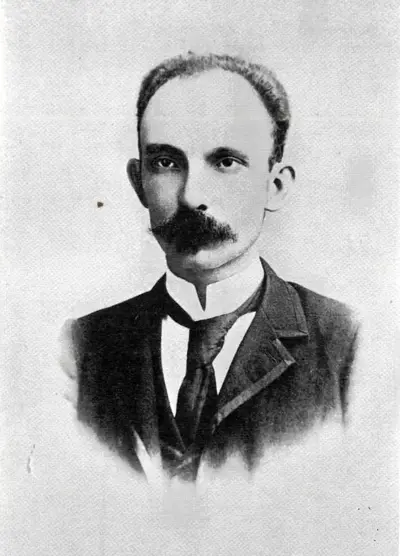
José Julián Martí Pérez was a Cuban poet, philosopher, essayist, journalist, translator, professor, and publisher, who is considered a Cuban national hero because of his role in the liberation of his country. He was also an important figure in Latin American literature. He was very politically active and is considered an important revolutionary philosopher and political theorist. Through his writings and political activity, he became a symbol of Cuba's bid for independence from the Spanish Empire in the 19th century, and is referred to as the "Apostle of Cuban Independence". From adolescence, he dedicated his life to the promotion of liberty, political independence for Cuba, and intellectual independence for all Spanish Americans; his death was used as a cry for Cuban independence from Spain by both the Cuban revolutionaries and those Cubans previously reluctant to start a revolt.
