Camille Paglia Quotes
I feel genuinely sorry for those who are so blinded by narrow partisanship that they cannot appreciate Limbaugh's energy, intelligence and satiric skill. They live in a box with bags over their heads. Though he and I hardly agree on politics (I voted for Ralph Nader last year and may go Green again in 2004), I respect Limbaugh as a political analyst and deft rhetorician who is a master of the microphone and who knows how to engage and challenge a vast audience.
Paglia, Camille. Provocations: Collected Essays on Art, Feminism, Politics, Sex, and Education. Pantheon Books, 2018.


4th Earl of Chesterfield. A Bill was being debated to control theaters and plays. At the time in England, playwrights would commonly write dialogue ridiculing politicians of the day. Lord Chesterfield was opposed to the proposed censorship.


Until the 20th century almost all American political media were shamelessly and overtly biased—left or right. Political Parties had their own de facto publications much like Fox News became for the Republicans in the 21st century. In the 20th century journalism developed into a profession that evolved standards of objectivity in reporting. That norm then prevailed for about 70 years. With the extreme polarization of the later years of the 29th Century the right wing began to accuse much of the media of a left wing bias, and the media tended to react as Krugman describes in this quotation. The model of having spokespersons for “each side” of an issue works for highly subjective political preferences with a two party system, but where it broke down is with scientific and technical issues. On these, there often really are not two scientific points of view, but there is a scientific consensus of the vast majority of scientists and almost all the prestigious and accomplished scientists are in accord. However, there may be some who have a cultural, religious and/or political concern for some science and its implications for society. They in turn find a scientist or two, often one who is unaccomplished and not recognized in the scientific field to argue a different point of view. The media have tended to equate the two and have a “debate” as if there were two sides to the science when there are not. These issues tend to cluster around scientific medical issues involving sex and birth control methods, environment and conservation, evolution, the age of the earth and the method of creation of the universe. The problem is particularly exacerbated by the general scientific illiteracy of the American population and the relatively few journalists who themselves are scientifically literate who can explain scientific issues well.


Most modern politicians are just the opposite. The political scene is rife with politicians impugning motives.


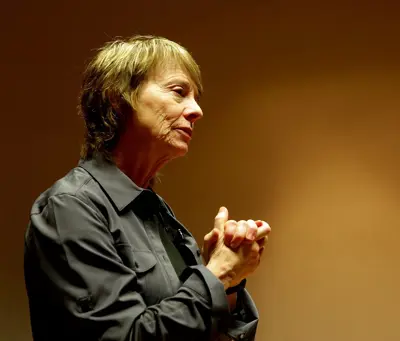
Camille Anna Paglia is an American feminist academic and social critic. Paglia has been a professor at the University of the Arts in Philadelphia, Pennsylvania, since 1984. She is critical of many aspects of modern culture and is the author of Sexual Personae: Art and Decadence from Nefertiti to Emily Dickinson (1990) and other books. She is also a critic of contemporary American feminism and of post-structuralism, as well as a commentator on multiple aspects of American culture such as its visual art, music, and film history.
