George F. Will Quotes
I don't think anyone has ever announced running for president that they want to change the Bill of Rights.


There was much New England dissatisfaction with the disproportionate power held by the Southern states as a result of counting three-fifths of the slave population for apportioning Congressional seats. In addition they were disproportionately hurt by the War of 1812 and the Embargo on trade with England. Secession was proposed but failed to get a majority. A number of proposed Constitutional amendments were voted upon. This one was for Presidential term limits.

Smith had written to most of the then likely Presidential candidates of both major parties asking for their position on the Mormons who were facing persecution wherever they went. None of the politicians would make any satisfactory commitments. Smith took Direct Action and became the only major religious official to have run for the Presidency of the United States until Pat Robertson tried and failed in 2000. Smith’s assassination shortly thereafter cut his run for the Presidency short before it made much headway and politically he had no chance to affect the race.

This president served his terms as allowed by the Constitution but then moved to change the constitution so that he could be the dictator as perpetual president. The purpose of constitutions is to limit and control the day to day political process and processes of reform. This stands the purpose of a constitution on its head. Modern totalitarian states almost all have constitutions. However where they differ from democracies is that the dictatorships ignore their constitutions, constantly suspend them in “emergencies” or change them at will to serve the interests of the ruling authorities. See {622125} for a Supreme Court Justice’s view of this kind of situation.


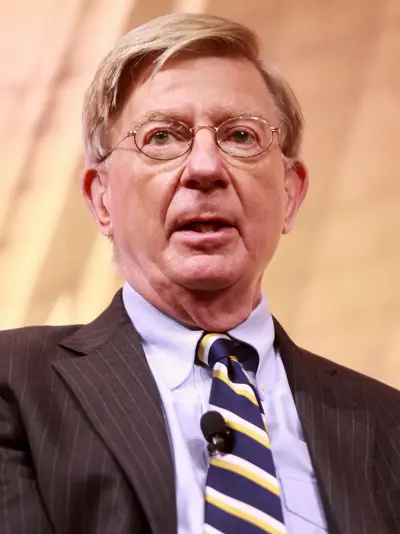
George Frederick Will is an American libertarian-conservative political commentator and author. He writes regular columns for The Washington Post and provides commentary for NBC News and MSNBC. In 1986, The Wall Street Journal called him "perhaps the most powerful journalist in America," in a league with Walter Lippmann (1889–1974). He won the Pulitzer Prize for Commentary in 1977.
