Sam Ervin Quotes
I don't like the surgeon's knife, but sometimes a cancer comes, a cancer on the body politic, and has to be eradicated the same way.
Referring to the Watergate hearings, of which he was chairman:
Samuel J. Ervin Jr., 1896-1985, U. S. Congressman & U. S. Senator (Democrat, NC), April 15, 1973
Sourced by: Eigen's Political and Historical Quotations


The Congressman, who had not been previously an enthusiastic leader for this type of reform, found himself with a chance to become Majority Leader of the House of Representatives. The previous leader was under indictment and was linked, along with other Republican Congressman to a Lobbyist who had pleaded guilty to bribing Congressmen. Another Republican Congressman had plead guilty to the felony of accepting bribes. The party that Controlled Congress was fearful of a voter backlash over the corruption—especially the role of lobbyists in giving money to Congressional campaigns. Bainor became a reform leader.


To orthodox Hindus the cow is a sacred animal and is not to be killed. The term has come into political use to mean a practice, or law that has been in existence a long time and is deeply respected and favored by some part of the population where any reform, change or improvement would have a political cost associated with it. Sacred cows are generally not to be even questioned. In orthodox Judaism, there is a sacred red heifer cow and the term may also have come from that.

Senator McCain, on the current lobbying scandal, in particular, and the state of the government’s relationship with lobbyists in general.

Even in modern times, almost all reform efforts succeed only if there is some villain or group of villains whose removal is the target of the reform effort. Then legislative changes are made to prevent future villains from being able to do the sane thing.


The public had been roused by the meatpacking scandal and the other exposes of the leading muckraking journalists—of which Baker was one. President Roosevelt had galvanized and led the public opinion to pressure congress and major great reforms were under way that would change America forever—see New York Times editorial {86516}.

See {640687}. He was then very worried about the influence of money in politics and was willing to risk his own reelection by limiting his contributions. And he was the Republican presidential candidate so his policy was particularly unusual. A century later money in politics had ballooned to a much larger problem as Taft’s action had little or no effect on the overall relationship between money and politics outside of his campaign.

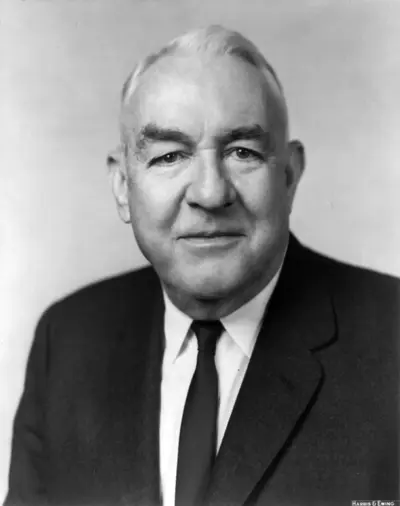
Samuel James Ervin Jr. was an American politician. A Democrat, he served as a U.S. Senator from North Carolina from 1954 to 1974. A native of Morganton, he liked to call himself a "country lawyer", and often told humorous stories in his Southern drawl. During his Senate career, Ervin was a staunch defender of the Jim Crow laws and racial segregation, as the South's constitutional expert during the congressional debates on civil rights. Paradoxically, he was also known for his support of civil liberties. He is remembered for his work in the investigation committees that brought down Senator Joseph McCarthy in 1954 and especially for his investigation of the Watergate scandal in 1972 that led to the resignation of Richard Nixon.
