Gail Collins Quotes
You can reform a political culture, but it’s a big lift. First, the voters would have to convince the legislators that they’re being watched by someone other than the lobbyists. Then they’d have to press for laws that would force a change of behavior, like nonpartisan redistricting and ethics reform. Then the voters would have to follow up, year after year, until the old guard was replaced by a whole new generation who went into politics with dreams of drafting serious legislation, rather than just bringing more stuff back into the district or, at worst, shaking down some landlord at the airport for a thousand bucks.
Gail Collins, Journalist & Columnist, “Is Yours More Corrupt Than Mine”, New York Times, May 12, 2013
Sourced by: Eigen's Political and Historical Quotations


The Congressman, who had not been previously an enthusiastic leader for this type of reform, found himself with a chance to become Majority Leader of the House of Representatives. The previous leader was under indictment and was linked, along with other Republican Congressman to a Lobbyist who had pleaded guilty to bribing Congressmen. Another Republican Congressman had plead guilty to the felony of accepting bribes. The party that Controlled Congress was fearful of a voter backlash over the corruption—especially the role of lobbyists in giving money to Congressional campaigns. Bainor became a reform leader.


At the time most legislatures never had recorded votes but instead often depended on voice votes and other methods. Edison’s invention was a huge failure. Transparency was not a popular concept amongst politicians as it still is not, but some standards have changed.


See {640687}. He was then very worried about the influence of money in politics and was willing to risk his own reelection by limiting his contributions. And he was the Republican presidential candidate so his policy was particularly unusual. A century later money in politics had ballooned to a much larger problem as Taft’s action had little or no effect on the overall relationship between money and politics outside of his campaign.


Trump often used the phrase "Drain the swamp" in his campaigning to mean get ride of the establishment figures who had, for the most part, dominated politics, for decades. When he was elected, he had to appoint a cabinet, but when he did so, it was almost exclusivly made up of people who had been a part of the political and corporate establishment -- the swamp.


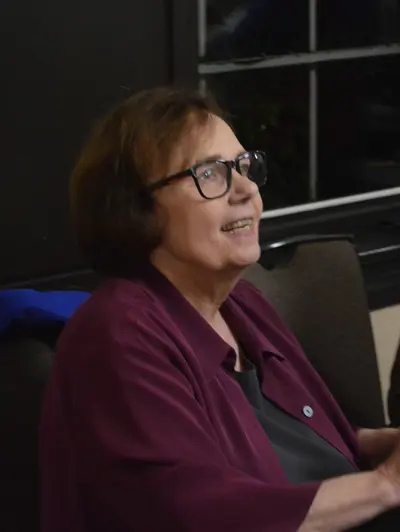
Gail Collins is an American journalist, op-ed columnist and author, most recognized for her work with The New York Times. Joining the Times in 1995 as a member of the editorial board, she served as the paper's Editorial Page Editor from 2001 to 2007 and was the first woman to attain that position.
