Sitiveni Rabuka Quotes
I do not deserve to be punished because my coup was successful. I was the winner and I succeeded in my revolution and brought changes to the system. Speight failed in his coup and deserves to be punished.
In 2002 George Speight attempted a military coups and failed. This statement is one of the most hypocritical political statements.
Sitiveni Rabuka, Fiji Military Coup Leader & Subsequent Prime Minister, May 15, 2002
Sourced by: Eigen's Political and Historical Quotations


20th century Africa and South America were particularly good examples.


The commander complained of the brutal behavior of Bolivar and the revolutionaries, but the atrocities committed by the Spanish forces were even worse and both sides fought with techniques that had no civilized restraints.


The Turkish revolution was by historical standards relatively bloodless as compared especially with other republican revolutions like the United State and France. However, the revolution that brought Ataturk to power was a relatively mild one in terms of the immediate changes that unlike many revolutions which produced instant radical change. In Turkey, the radical change took place in the years after the revolution when Ataturk with hardly any bloodshed produced compulsory public secular education, scientific elevation in society, separation of mosque and state, gender equality including universal voting, change to western dress, elimination of the caliphate, speech and press freedom, and many others including changing the entire language to use the Latin alphabet instead of Arabic. No nation in history has gone thought more social and cultural change and modernized so fast as Turkey after its revolution. The result is the most modern and successful Islamic country in the world.


In the Vietnam War, America and her allies were defending the South Vietnamese from the Communist and Nationalist incursions of the North Vietnamese. However, the South Vietnamese government was itself a very fragile democracy which provided rights little better than the Ho Chi Min lead government of the North. Further, the South Vietnamese rulers and governments while claiming to be democracies, were little more than in name only and were very corrupt. As with many unstable and weak governments, South Vietnam had experienced a succession of coups, with some of his advisors favoring the coups and a few actualy supporting them. Johnson was continually frustrated by this and this expression was his own inimitable style.

Christie was a Tory—a British supporter, but what he did that was so offensive was that he had requested that British Troops come to Maryland to control the rebellion.

History is replete with instances of military coups. In the final analysis, in every country at all times, there is no force in a society that could cope with a military which decides to act on its own. The Founding Fathers were very conscious of this reality and history, hence the firm civilian control of the military in America.

Germany, after its defeat in WWI was going through massive demonstrations and strikes. The government kept issuing bulletins that “Order Prevails” and the like. Luxemburg’s rhetoric and writing was so damaging to the government that they had her assassinated shortly after this statement.


Campbell carried out the order although many MacDonalds escaped in the highlands. The particular massacre has always taken on an even greater infamy because the Campbell murderers had been given food and hospitality by the MacDonalds. This began the most bitter of the Scottish clan feuds that persists into modern times.

Quoted in somewhat different form by Richard Nixon


In 1786, many veterans of the American Revolution had still not yet been paid the promised wages for their military service by the new national government. The States however had imposed taxes on farms to fund the new state governments and pay the state’s war debts mostly to rich merchants. Many veterans could not pay the taxes and some were thrown into debtors’ prison, and others had their farms foreclosed. Led by Daniel Shays, a small group of Massachusetts men conducted a mini rebellion by closing local court houses and tried to take over the local state armory. The Governor put down the rebellion by force and the rebels were jailed. Samuel Adams, the former governor, recommended the death penalty (see {630527}), and several of the rebels were executed. Thomas Jefferson disagreed, via this famous quotation. This was one of the early crises of the new country and it was handled very poorly and unfairly.

There was an attempt by some Libyans to attack a Libyan student at an American University who was an outspoken critic of the Qaddafi regime.

The revolution turned on many of its initiators including Vergniaud. He was guillotined along with other Girondists.

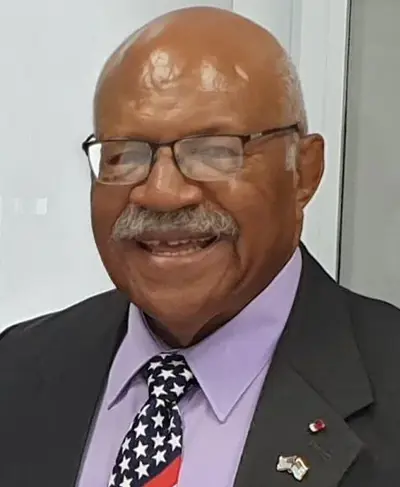
Sitiveni Ligamamada Rabuka, OBE, MSD, OStJ, is best known as the instigator of two military coups that shook Fiji in 1987. He was later democratically elected as Prime Minister of Fiji, serving from 1992 to 1999. He went on to serve as Chairman of the Great Council of Chiefs, and later served as Chairman of the Cakaudrove Provincial Council from 2001 to 2008. He was elected to this position on 24 May 2001 and re-elected for another three-year term on 13 April 2005. On 24 June 2016, Rabuka was elected as leader of the Social Democratic Liberal Party, succeeding Leader of the Opposition Ro Teimumu Kepa, who publicly disapproved of Rabuka's nomination to replace her. On 26 November 2018, Rabuka was appointed as the leader of the Opposition to Parliament, following the 2018 election defeat. Rabuka was the only nomination for the position and his nomination was moved by Ro Teimumu Kepa and seconded by Biman Prasad. On 28 November 2020 he was ousted as SODELPA leader by Viliame Gavoka in a leadership contest. On 7 December 2020 Rabuka had resigned from parliament citing that he will no longer be an obstacle to the bipartisan approach to be taken by the leaders of Fiji to create harmony and progress and unity in Fiji.
