Dana Bash Quotes
I covered the White House during the Bush years when Ari Fleischer, Scott McClellan and Dana Perino were at the podium. We thought those were, at times, crazy press briefings, asking questions about major events like the Iraq War and the leaking of Valerie Plame's name and the outing of her as a CIA operative.
Bash, Dana. "In Defense of the White House Press Briefing." CNN, Cable News Network, 23 June 2017.


After the United States Military victory at the Beginning of the Iraq War, the Bush administration operated under the neoconservative view that the Iraqis wanted a democracy and freedom and saw the occupation and reconstruction of Iraq as an opportunity to apply extreme conservative principles in the construction of a modern democracy in the Middle East. Bush appointed one of his political supporters and conservative ideologue as the head of the occupation authority and almost all of the many positions to rebuild Iraq was filled with conservative ideologues almost all of whom had no previous practical experience in the area of their new responsibility, and had not diplomatic skills or experience in Iraq, the Middle East. Almost none spoke Arabic or knew anything about Islamic culture. The occupation was a disaster, and the deadly phase of the Iraq war broke out.

President George W. Bush, to justify the invasion of Iraq had told the public that the Iraqi regime was developing nuclear weapons and other weapons of mass destruction, and had participated in the September 11 attack on the United States by assisting Al Qaeda. It turned out that these statements were false. The administration claimed that their error was well intentioned and the result of faulty intelligence. Opponents claimed that the administration officials knew that they were exaggerating and had pressured the intelligence agencies to create intelligence conclusions that supported their story.

The “Principals Committee” is the senior interagency forum for consideration of policy issues affecting national security. It includes the National Security Director (Chair), the CIA Director, the Secretary of Defense and his Deputy, the Secretary of State and his Deputy, the Chairman of the Jount Chief’s of Staff, The Special Representative to the United Nations and other staff as invited. Clarke was almost always invited to these meeting when terrorism was discussed but he did not have a vote. This is a very important quotation for several reasons. First, it shows the influence that the Defense Department and CIA leaders had with President Bush before the 9-11 attack. It also illustrates dramatically how reluctant our military and CIA were to use drones. It was President Obama who overruled them and changed America policy to use Drones to protect American interests. It also indicates how there was a split regarding the perception of the danger of Al Qaeda and bin Laden with Clark and some of the other Principals placing more value on a military strike than the military and covert action leaders. This is not uncommon despite the fact that public perception is that it is always the military leaders who are the hawks. Also, it illustrates the problem of allowing the military point of view to always prevail in national policy making involving use of force. See {639322}.


See {618460} for the kinds of statements that stimulated this type of political attack.

Kennen, one of the great American wise men for foreign affairs, could not have predicted the outcome of the Iraq war any better.


During the George W, Bush Administration, key politicians, including the vice president pressured and influenced the CIA and to produce intelligence reports that justified their policy of invading Iraq. After the invasion, the weapons of mass destruction were shown to have never existed even though they were the official causes belli (cause of the war).

The Canadians chose not to join the United States efforts to develop and test a missile-defense system, the first tests of which had gone poorly.

While this probably was a slip of the tongue, President Bush and governor Perry both had civil right and individual had rights as a lower priority than a individual responsibility, strong growth economy or the military. There were many who really believed that the two men really thought excessive personal reedom a problem that people and the government must be protected from, like freedom for a woman to choose an abortion. For Perry in particular many thought that if this was a slip of the tounge, it was likely a Freudian slip as it what he really wants.

even though in this case the objective The State Department, the Defense Department and most important President Kennedy had decided to get rid of Diem. Most of the Central Intelligence Agency thought that this was a very unwise policy, because Diem was a known risk, and the people who would replace him and their talents and policies were unknown. The negatives of Diem—the facts that he, a Christian, was persecuting the majority Buddhists, was totally corrupt, and not a very good leader was less distressful to the CIA than to the President and the other agencies as the intelligence agency frequently not only tolerated “offensive” allies, but actually employed them including war criminals. Another importance of this quotation is that it shows that it was by no means certain that the CIA would always follow the orders of the President and the government policy makers. Colby, who was not the agency director at that time but was the head of the South East Bureau, was one high level official who argued that the policies should always be followed even if they were unwise or foolish. Another importance of this quotation is that it illustrate a common error that administrations are frequently forced to make: making a policy decision to eliminate a problem while not having much of an idea of what the alternative or consequence would be when the policy is implemented. The Syrian Civil War in 2013 was a good example. The Government side appeared to have used Chemical Warfare on Civilians and public opinion demanded that we do something. However, having a no-fly zone or any of the alternatives to prevent (punish) the government for the Chemical Warfare would strengthen the rebel side which was made up of numerous factions—some of which were known Islamic fundamentalist terrorists and jihadists. If the balance of power were tipped toward the rebels, the consequence for the American national interests were unknown—just as the consequence of ousting Diem was unknown and turned out to also be bad and was probably worse.


The attack on the World Trade Towers and our military reaction to that could not fairly be blamed on Bush. However, the Iraq War was certainly a policy choice he made. And he also made the decision to cut taxes (mostly for the rich) on the assumption that this would stimulate the economy and produce even more taxes. It did not. And also on Bush’s policy responsibility was his decision not to raise taxes to pay for a war. This had never been done in American history. And Bush was fighting two wars. In addition when he took office Bill Clinton had balanced the budget and left a substantial surplus. Instead of using the surplus to pay for his other policy decisions, he spent it.
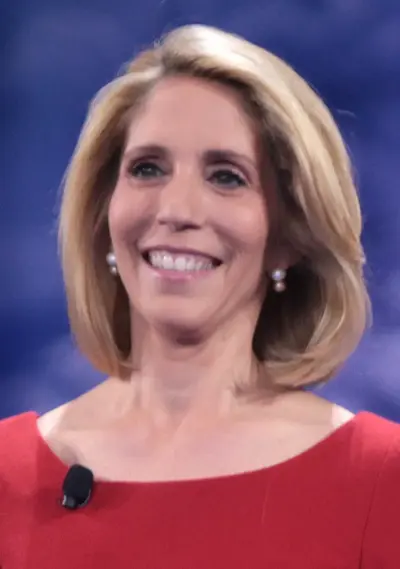
Dana Ruth Bash (née Schwartz) is an American journalist, news anchor, and chief political correspondent for CNN.
