James Wolfe Quotes
I congratulate you, my brave countrymen and fellow soldiers, on the spirit and success with which you have executed this important part of our enterprise.

He always appeared in a military uniform after that.


Adams, after his presidency, served in the House of Representatives for many years. He collapsed at his desk in the House and died in the Speaker’s office.


Ataturk was a young major at the time commanding troops of a weak and corrupt Ottoman regime. However a combined English and French (the strongest military powers in Europe) invasion of the Gallipoli Peninsula threatened to capture the Turkish capital, Constantinople. Ataturk alone rallied the Turkish defenders and fought the invaders to a standoff in long drawn out battle with huge casualties on both sides. Ataturk became a national hero. Although Ataturk thereafter was very reluctant to use military force or endanger troops, the thing he always thought worth the supreme sacrifice (including his own) was the independence and sovereignty of the nation. See {584502} for his continuing belief in this type of sacrifice.


A Federal Naval flotilla was preparing to attack South Carolina Forts Beauregard and Walker in the area of Hilton Head and Port Royal. The navy took both forts the next day with their naval bombardment so powerful that the Confederate Rebels had to abandon both forts gaining a kind of revenge for the Confederate capture of Fort Sumter at the war’s beginning.


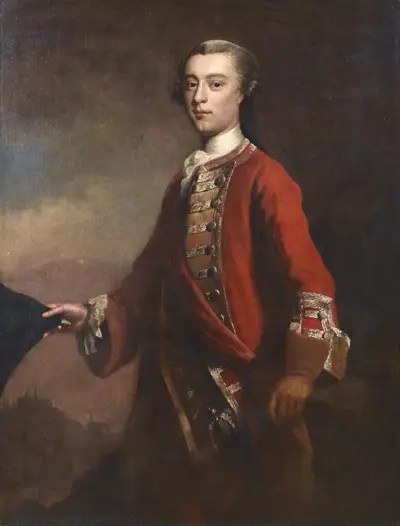
James Wolfe was a British Army officer known for his training reforms and remembered chiefly for his victory in 1759 over the French at the Battle of the Plains of Abraham in Quebec as a major general. The son of a distinguished general, Edward Wolfe, he received his first commission at a young age and saw extensive service in Europe during the War of the Austrian Succession. His service in Flanders and in Scotland, where he took part in the suppression of the Jacobite Rebellion, brought him to the attention of his superiors. The advancement of his career was halted by the Peace Treaty of 1748 and he spent much of the next eight years on garrison duty in the Scottish Highlands. Already a brigade major at the age of 18, he was a lieutenant-colonel by 23.
