Mahatma Gandhi Quotes
I cannot picture to myself a time when all mankind will have one religion.
Gandhi, Mahatma. The Collected Works of Mahatma Gandhi. Vol. 75, Publications Division, Ministry of Information and Broadcasting, Government of India, 1979, p. 306.

His protest was focused on Middle East policies which he believed did not value the lives of Muslims as highly as Christians and Jews. The irony of this protest is that United States policy claims to value all life equally as do virtually all industrialized democracies. Omeish however is unusual among world Islamic leaders and politicians in that he values Christian and Jewish life as much as Muslim. Most, typically value Muslims almost exclusively and many advocate the killing of Christians and Jews.


Alfonso the Learned. He personally wrote a History of Spain up to the time.


This was the beginning of the inquisition.

While not in the Koran, this attributed statement is the basis for the ban on non-Muslims going on a Hajj and going to the most holy Muslim places—Mecca, Mina, Muzdalifa, and Arafat as well as the anti-religious hostility to all religions but Islam which is present in some Muslim countries.

Kung wrote against the infallibility of the Pope and was not allowed to teach as a Catholic.

Followers of the religious views of January Hus, 1369-1415 Hus was excommunicated and executed for his views that parts of the church were corrupt.


Anne was a Protestant but her father James II was a Roman Catholic. There was always suspicion about her true religious allegiance by the extremists in the Church of England. The Act of Toleration, despite its name, required the Church of England to be the established church and the sovereign’s to be the heads of the church.

The origins of the extreme religious intolerance of Spain occurred centuries before the excesses of the Spanish Inquisition. Before the Conference the Visigoths and their king had been converted to Christianity but not all cared for the new religion.


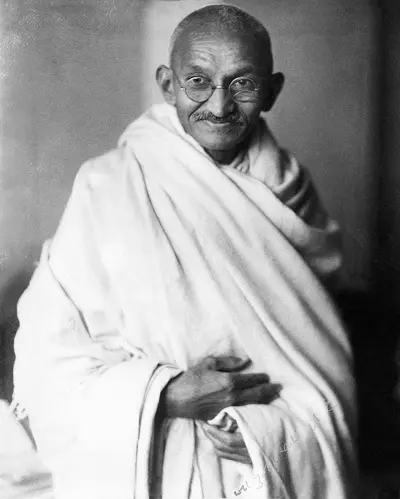
Mohandas Karamchand Gandhi was an Indian lawyer, anti-colonial nationalist, and political ethicist, who employed nonviolent resistance to lead the successful campaign for India's independence from British rule, and in turn inspired movements for civil rights and freedom across the world. The honorific Mahātmā (Sanskrit: "great-souled", "venerable"), first applied to him in 1914 in South Africa, is now used throughout the world.
