Mahatma Gandhi Quotes
After long study and experience, I have come to the conclusion that (1) all religions are true; (2) all religions have some error in them; (3) all religions are almost as dear to me as my own Hinduism, in as much as all human beings should be as dear to one as one's own close relatives.
Gandhi, Mahatma. The Diary of Mahadev Desai, Vol. 1, Navajivan Publishing House, 1953, p. 116.


This quotation illustrates that a narrow orthodox view of Islam is not the only one in Arab nations. Khaled is not an obscure cleric, but a popular television personality. While his views are considered heresy by many orthodox Muslims, the narrow view is by no means universal. Orthodox Islamists believe that God has commanded that all mankind be Muslims and the ones who are not are either ignorant so need to be “educated”, or evil and therefore should be killed. However, Muhammad ordained that an exception should be made for “Children of the Book”—Jews and Christians who revere the Old Testament. This was at a time when Christians would not allow any other form of worship but Christianity. Christianity, Judaism and most other religions have become tolerant of other religions and allow open alternative worship. Islam which early on led the way to tolerance, has in many countries gone back to the intolerance that existed amongst many Christians at the time of Muhammad.


Jefferson drafted the law which became the basis for the First Amendment to the Constitution. Others wanted change in some of Jefferson’s language to be Christian Centric but the delegates rejected that idea. See {623696}. The separation of church and state was not to be total. The state and the law was required to protect religion—all religions including those thought to be heretical.


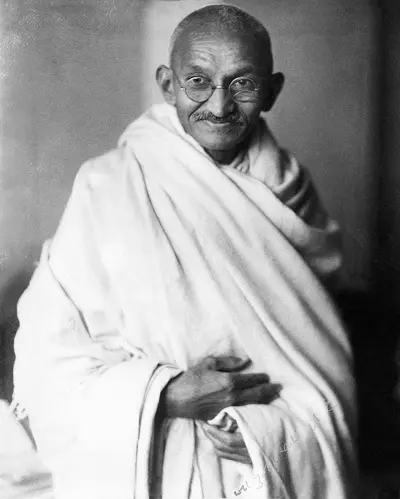
Mohandas Karamchand Gandhi was an Indian lawyer, anti-colonial nationalist, and political ethicist, who employed nonviolent resistance to lead the successful campaign for India's independence from British rule, and in turn inspired movements for civil rights and freedom across the world. The honorific Mahātmā (Sanskrit: "great-souled", "venerable"), first applied to him in 1914 in South Africa, is now used throughout the world.
