John Yoo Quotes
I believe that the power to declare war is most important in limiting the powers of the national government in regard to the rights of its citizens, but that it does not require Congress to give its approval before the president uses force abroad.
Yoo, John. "An Interview with John Yoo." University of Chicago Press, 2005.


When the Senate was debating the Gulf of Tonkin Resolution, which would empower the President to take "all necessary measures" to repel any armed attack on U. S. forces, Senator Morse was one of only two Senators opposing the resolution:


The president did not act purely on his own. The operation in Libya was a NATO operation, not a U. S. operation. All NATO countries unanimously approved the enforcement of the No Fly zone and it was approved by the Security Council of the United Nations, Technically the operation was not war. NATO and the United States was asked to support the no fly zone by the Government of Libya which we and the other countries all recognized at the time. However, since the later part of the 19th century, America has debated exactly who and under what conditions can commit U. S. Troops to hostilities. The prerogatives of Congress in the war powers debate have eroded to the Presidency in the last 2 centuries and some, like Paul feel that the older balance should be restored.


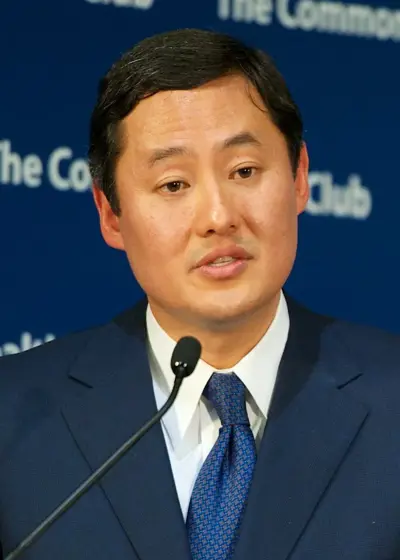
John Choon Yoo is a Korean-born American legal scholar and former government official best known for authoring the Torture Memos, which provided a legal rationale for the torture of detainees during the War on Terror. Yoo is the Emanuel S. Heller Professor of Law at the University of California, Berkeley, School of Law.
