Bertrand Russell Quotes
I am writing to you to tell you of my decision to return to your Government the Carl von Ossietzsky medal for peace. I do so reluctantly and after two years of private approaches on behalf of Heinz Brandt, whose continued imprisonment is a barrier to coexistence, relaxation of tension and understanding between East and West... I regret not to have heard from you on this subject. I hope that you will yet find it possible to release Brandt through an amnesty which would be a boon to the cause of peace and to your country.
Brandt was released shortly thereafter. Russell was considered a trouble maker by the Americans and England as well as by the Communist leaders.
Bertrand Russell, 1872-1970, British Philosopher & Reformer, Letter to East German Ruler, Walter Ulbricht, January 7, 1964
Sourced by: Eigen's Political and Historical Quotations


The Ambassador was referring to the massive demonstrations in Lebanon forcing the Syrian-backed government to resign despite the occupation of Lebanon of Syrian intelligence operatives and troops.


Compare this to Bernard Baruch's quotation about a cold war the year before.


The Spanish had been beaten and bloodied by England, but no one else until Napoleon would come along later. So it was easy for Spain to bully and dominate the non-English countries.

She had gone to Europe where the 2nd World War was raging.


Truman had to deal with Stalin for many years and over time he became more and more soured on the Russians. See {626411} for his view 22 years later,


The statement he coined was one of the most common slogans in the 1960s. It was on signs, bumper stickers, T-shirts—even tattoos on people’s bodies. It is still a favorite of peace advocates.


Gladstone received a telegram from Queen Victoria asking him to form a government and become Prime Minister:
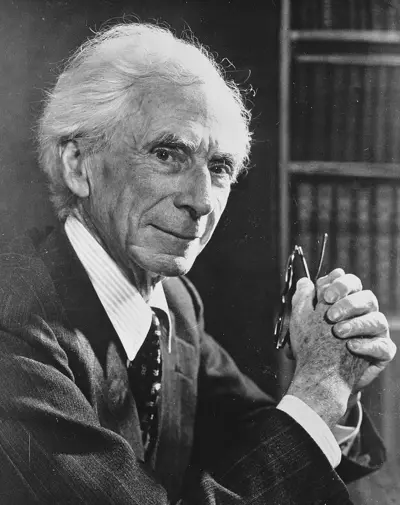
Bertrand Arthur William Russell, 3rd Earl Russell OM FRS was a British polymath, philosopher, logician, mathematician, historian, writer, social critic, political activist, and Nobel laureate. Bertrand Russell was one of the most influential and widely known intellectual figures of the twentieth century. In 1950 he was awarded the Nobel Prize in Literature for his extensive contributions to world literature and for his “rationality and humanity, as a fearless champion of free speech and free thought in the West.“
