G. H. Hardy Quotes
I am obliged to interpolate some remarks on a very difficult subject: proof and its importance in mathematics. All physicists, and a good many quite respectable mathematicians, are contemptuous about proof. I have heard Professor Eddington, for example, maintain that proof, as pure mathematicians understand it, is really quite uninteresting and unimportant, and that no one who is really certain that he has found something good should waste his time looking for proof.
Hardy, G. H. Ramanujan: Twelve Lectures on Subjects Suggested by His Life and Work. Cambridge University Press, 1940, p. 15.


There are many systems of mathematics which are totally contrary to the world as we know and observe it; others, reflect the world as it is known. The latter we use for science. The former exist only in the mathematics world. We have mathematics today of computers that do not exist, universes that can only be imagined and some that are not even imaginable. Sometimes we realize that a mathematical system we thought had no reflection of reality, was really useful in explaining a new physical phenomenon. What is theoretical today, might need to be applied tomorrow.


Feynman generally emphasized the importance of a scientist understanding the mathematics of his/her subject, especially where nature's complexities abounded. At the time few appreciated the importance in the biological sciences of mathematics which we know today is so essential.


3rd Earl Russell of Kingston. In mathematics the numbers can count people, autos, sins, molecules, or paintings. The mathematician does not know or care. And the mathematics is the same regardless. And the fundamentals themselves are unknown. For example, what is a number? It’s not the symbol we write; that is a numeral. Some say that it is an abstract idea that represents a quantity like 5. But what is 5? That itself is an abstraction. So few mathematicians and no layman know what they are talking about when they do mathematics. Lord Russell, with his colleague Whitehead, built up a system where they could define a number as a set with certain properties. But they take 3 large volumes full of equations in a small type font to just get to 3rd grade arithmetic and knowing what they are talking about. In politics, we also often do not know what we are talking about, but that is for a much simpler set of reasons.

For many scientists, this is the goal of each area of inquiry. For others, the science is crude and really not understood unless the mathematical model exists and can be verified experimentally. For Thompson, this was the difference between understanding and not.

Spinoza’s ideas were considered so radical and dangerous that he was the only man in history who was excommunicated by the Catholics, the Jews and the Muslims.


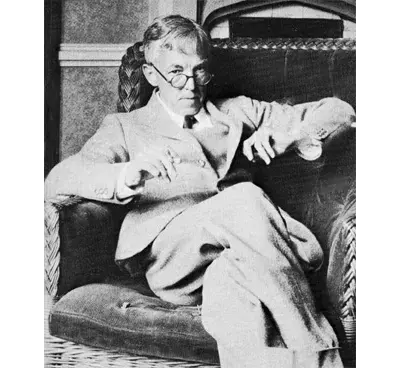
Godfrey Harold Hardy FRS was an English mathematician, known for his achievements in number theory and mathematical analysis. In biology, he is known for the Hardy–Weinberg principle, a basic principle of population genetics.
