Mahatma Gandhi Quotes
I am not fighting machinery as such, but the madness of thinking that machinery saves labor. Men save labor until thousands of them are without work and die of hunger on the streets. I want to secure employment and livelihood not only to part of the human race, but for all. I will not have the enrichment of a few at the expense of the community. At present the machine is helping a small minority to live on the exploitation of the masses. The motive force of this minority is not humanity or love of their kind, but greed and avarice.
Gandhi, Mahatma. "The Machinery Method." Young India, Navajivan Publishing House, 13 Nov. 1924, p. 378.


Modern slavery involved forced prostitution, child labor and various forms of indentured servitude together with importing illegal workers and threatening to have them deported if they complain or go public about their slave labor conditions.


Technology has always displaced and replaced workers, but most industrial technological breakthroughs, in the long run, have created new jobs and better paid ones. What worried Gompers did not appear to materialize in his lifetime, but actually became and issue on the later years of the 20th century and the early 21st century where the computer the robot, and the sophisticated software began to replace workers at a faster rate than new opportunities were created. Gompers was one of the harbingers of things to come.

This was an honest theoretical belief of Mises. However, most of the criticism of capitalism in the industrial democracies is precisely the lack of unemployment and sustenance for all. When it does, even complaints about inequality tend to be minimal. But some capitalist societies never provided these, and by the 21st century, no capitalist nation was able to do so permanently without recessions and depressions.


One of the arguments in favor of machinery and automation has always been that new and better jobs are created for the people who run and maintain the machines. However as Marx observed in 1867 that is of no comfort to the person who is replaced by the machine. Also with the computer and modern robots, the control and operation is often done by another computer. Even much of the computer programming is done by computer.

One problem critics have with his argument is that while there is always work to be done, there are not always entities willing to pay for the additional work. Gains in productivity will justify investment in more rapid deployment of technology; thus entities in society are will to invest the funds. But if there is no visible economic return from the additional work, corporations and taxpayers may be unwilling to fund it leading to massive unemployment and instability.


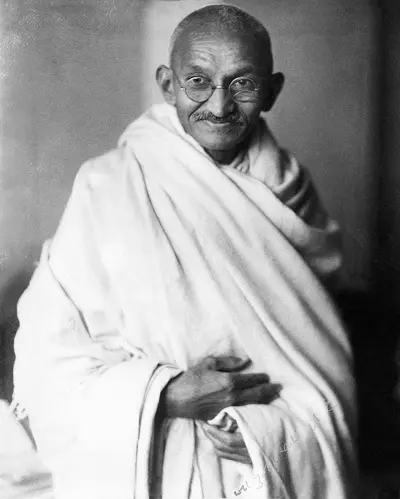
Mohandas Karamchand Gandhi was an Indian lawyer, anti-colonial nationalist, and political ethicist, who employed nonviolent resistance to lead the successful campaign for India's independence from British rule, and in turn inspired movements for civil rights and freedom across the world. The honorific Mahātmā (Sanskrit: "great-souled", "venerable"), first applied to him in 1914 in South Africa, is now used throughout the world.
