Milton Friedman Quotes
I am myself persuaded, on the basis of extensive study of the historical evidence, that... the severity of each of the contractions - 1920-21, 1929-33, and 1937-38 - is directly attributable to acts of commission and omission by the Reserve authorities and would not have occurred under earlier monetary and banking arrangements.
Friedman, Milton. A Program for Monetary Stability. Fordham University Press, 1960, p. 38.


What is fascinating about this quotation is that although the head of a religion, Smith was not advocating the kinds of personal lifestyle issues of his church the way modern religious leaders do, but was concerned with the much larger issues of national banking, expansionism, corruption of the courts and judiciary, and land distribution. He was a classic reform candidate in that sense. Smith had written to most of the then likely Presidential candidates of both major parties asking for their position on the Mormons who were facing persecution wherever they went. None of the politicians would make any satisfactory commitments. Smith took Direct Action and became the only major religious official to have run for the Presidency of the United States until Pat Robertson tried and failed in 2000. Smith’s assassination shortly thereafter cut his run for the Presidency short before it made much headway and politically he had no chance to affect the race.


“Pegged” exchange rates are a country’s money where the Government sets the value of the money in terms of some other currency—usually American dollars. The advantage of a pegged currency is that it is stable and does not fluctuate day to day. The disadvantage is that people realize that the value is artificial and other countries will not accept the pegged currency. Worse natives try and get as many dollars as they can because the fear that the Government will devalue and change the rate of exchange of the pegged currency.

This quotation amazes many people who believe that Hoover caused the Great Depression and that Roosevelt and the Democrats accused him of this. Actually, as Mrs. Roosevelt says here, the causes were the policies of the Republicans who preceded Hoover. Hoover was actually to blame for not doing much about the Depression. He believed philosophically that the Government should not “intervene” in the market place and that government assistance to individuals would damage their character. Most Americans saw this as uncaring and callous.

Paul wanted to abolish the Federal Reserve Board. This is a political viewpoint that goes back to the Founding Fathers debates about a national bank. Andrew Jackson terminated the national bank and later the concept of the Federal Reserve Bank took its place.


"Market mispricing" is an economic euphanism for the bankers and major investors of the nation (and abroad) bidding up the prices of the assets in order to continue to squeeze large profits even after they knew that the assets had been far overpriced. Few wanted to stop playing hoping the music would not stop in the economic game of musical chairs. When it did, there were not enough "seats" and failures casued other failures and the contagion spread.


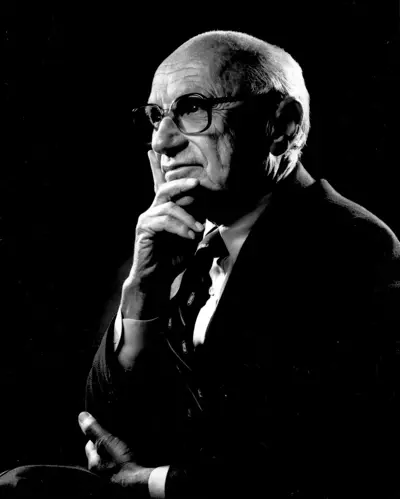
Milton Friedman was an American economist and statistician who received the 1976 Nobel Memorial Prize in Economic Sciences for his research on consumption analysis, monetary history and theory and the complexity of stabilization policy. With George Stigler and others, Friedman was among the intellectual leaders of the Chicago school of economics, a neoclassical school of economic thought associated with the work of the faculty at the University of Chicago that rejected Keynesianism in favor of monetarism until the mid-1970s, when it turned to new classical macroeconomics heavily based on the concept of rational expectations. Several students and young professors who were recruited or mentored by Friedman at Chicago went on to become leading economists, including Gary Becker, Robert Fogel, Thomas Sowell and Robert Lucas Jr.
