Hassan Nasrallah Quotes
I am against any reconciliation with Israel. I do not even recognize the presence of a state that is called "Israel." I consider its presence both unjust and unlawful. That is why if Lebanon concludes a peace agreement with Israel and brings that accord to the Parliament our deputies will reject it; Hezbollah refuses any conciliation with Israel in principle
Hezbollah, like the IRA, is both a terrorist organization and a political party.
Hassan Nasrallah, Lebanese Secretary General of Hesbollah, Quoted in The Washington Post, February 20, 2000
Sourced by: Eigen's Political and Historical Quotations

This statement hardened the Israeli population away from anything that would bring Hamas more power. The PLO leader had, for ALL the Palestinian people, recognized the right of Israel to exist {633062}. Now Hamas was not only reneging on the Arafat declaration, but also would not even use the term “Israel” and instead calls the nation which in less time than the Palestinians have had, has developed a modern, industrial, democratic state far in advance of the Palestinians or any of the Arab nations for that matter. Yet it is relegated to a “project” with the great hope of having it come to an end—the destruction of Israel. The Israelis observe that this is a de facto declaration of war, and hence treat Gaza and Hamas as an enemy force to be reckoned with. See {635338} for another alarming reneging of the recognition of Israel.


In the modern media age, there is intense pressure on peace negotiators to reveal progress, problems, reactions, suggestions that are made by the parties to the peace talks. Rumors and premature public knowledge of the details of peace talks often can undermine and sometimes destroy and progress that was being made.


At that time Jews in Palestine were in the minority. The issue of how to obtain the land was hotly debated amongst Jewish groups. Jabotinsky was at one extreme—colonize and take the land just as the Arabs had done to the Jews when there was a Jewish majority. His view did not however prevail. The policy was to buy the land from individual Arabs and Jewish land up to 1948 was obtained that way. In that year the UN partitioned Palestine and 11 Arab armies attacked the new state of Israel and asked the Arab civilians to leave the area so that the Army could cleanse it of Jews. Many did not, and they or their descendants are still on their land or have sold it. The Arabs who left, were suspected of being possible collaborators or terrorists, and they have never been paid for their land or allowed to return. Compensation is still in dispute. At the same time Jews driven out of Arab countries by law and the military have never been compensated or given any right of return either.

This resolution has never been rescinded. Some Arab states have abandoned this resolution and negotiated peace and recognition such as Egypt. The majority of the Arab States did and do not want peace with Israel. They did and do not want to recognize Israel and they did and do not want to negotiate. But they often blame Israel for being intransigent in the peace process. Many Arabs want a peace treaty and want to negotiate but the extreme rejectionists generally dominate Arab politics.


The PLO and most of the Arab nations, took the position that the United Nations original partition of Palestine into a Jewish and a Palestinian nations -- UN General Assembly Resolution 181 – was “illegal”. That view has served as the basis for the Arab Israeli problems since. The basis of the illegality they claimed was the right of the Palestinians to self determination. However, it is a right which they deny to the Jews living in Palestine who also had a right to self determination. The UN solution was to partition the land into two nations so that the each had the right of self determination. However, the Arab leadership wanted only Arabs to have the right of self determination.


Vladimir Lenin


2nd Viscount Melbourne. The “American treaty” was the Webster–Ashburton Treaty to adjust the final borders between Canada and the United States that were still in dispute from the War of 1812. Note that the British Prime Minister was critical of the position that was being taken be some British diplomats. In many American negotiations with Russia and others, there are hard liners who believe that the negotiators want too much to preserve peace and are not sufficiently willing to go to war for the nation’s principles and honor. As this quotation shows, this is not just an American phenomenon, but in almost all nations there are hard liners critical of all international negotiations and fearing that a desire for an agreement will undermine the positions that should be taken. This is an example where the hard liners were on the non American side.

A major issue amongst Israeli’s is to how they should relate to those hostile Islamic nations in their area who claim they are at war with Israel or the Jewish People. This position in effect says that the oratory of those Islamic groups that claim that they are in a war—a holy war even—should be taken at their word and treated as a wartime enemy and Israel should actively attempt to kill and destroy them.


The Republican controlled Senate had turned down the ratification of the League of Nations presented by Democratic President Wilson, and looked like they would turn down any international treaty even if presented by a Republican President. This statement allowed the treaty ratification by only a few votes. However, after that the Senate turned down our participation in the Permanent Court of Arbitration at the Hague. See {640099}.


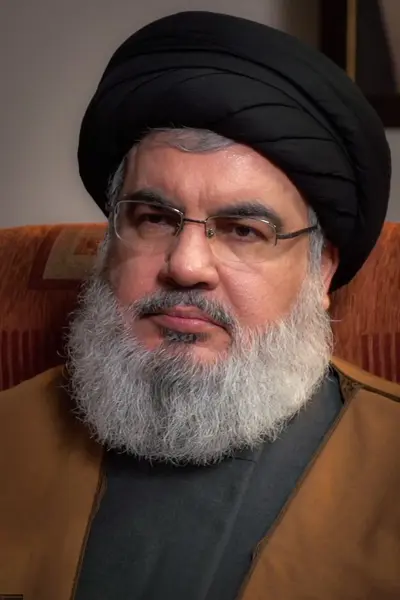
Hassan Nasrallah is a Lebanese cleric and political leader who serves as the 3rd secretary-general of Hezbollah since his predecessor, Abbas al-Musawi, was assassinated by the Israel Defense Forces in February 1992.
