Emir Kusturica Quotes
I am a living illustration of Bosnian mixing and converting. My grandparents lived in eastern Herzegovina. Very poor. The Turks came and brought Islam. There were three brothers in the family. One was Orthodox Christian. The other two took Islam to survive.
Kusturica, Emir. Quoted in "Emir Kusturica - Biography." IMDb, IMDb.com, www.imdb.com.


In 1856 Turkey and its Ottoman Empire was struggling with new ideas and attempts to reform before they were hopelessly engulfed by modernism. A set of reform laws were passed in February of 1856 which horrified the conservatives and traditionalists. But interestingly the orthodoxy of the Greek minority were unhappy with their legal elevation if it meant that all would be equal. The Minister’s description of opposition to the reforms was somewhat self-serving in that he opposed most of the reforms and wanted to maintain the traditional Islamic state.
The Jews, Christians and Zoroastrians were allowed to maintain their own religion and live as 2nd class citizens and pay a special tax, but ALL other religions were to be forced to convert.


The Ottoman Empire was a word Superpower for over 1,000 years, longer than any other in history, One of its great strengths was its pluralism and ability to not only absorb and assimilate people from other nations, cultures and religions, but also to utilize those people in key positions and contributions to their society. Christians and Jews rose to the highest positions under the Sultans. They became Governor’s of Provinces, manages of departments and even Grand Vizier to the Sultan himself. Jewish and Christian physicians, attorneys, traders were all valued in the Empire even though the had a second class status relative to Muslims. The opportunity was always there to convert to Islam and many did, but many did not and thrived, The Ottomans saw Christian Europe, not only in continuous religious conflict, but individual nations were never able to use the talents of the religious minority, the way that the Ottomans did, and later the United States did. Not only did the Ottomans allow immigrants from all over the world to become part of the Empire Government or Economy, but they actually send agents throughout the empire to find the best and the brightest of young men—regardless of religion or nationality—and bring them to the Sultan’s court for education, training and service. IT should be noted however, that the motivation was in no way moral or a desire for fairness. It was totally pragmatic. Exceptional manpower was not to be wasted.

He is a Greek Orthodox Christian, and he correctly observes that the Islamic world was considerably more tolerant than the Christian until the 18th century when Islam had become less tolerant in the Middle East while the Christians were modernizing and going through a cultural and intellectual enlightenment and societal modernization while the Muslims, became less tolerant than they were in earlier years leading to the modern situation.


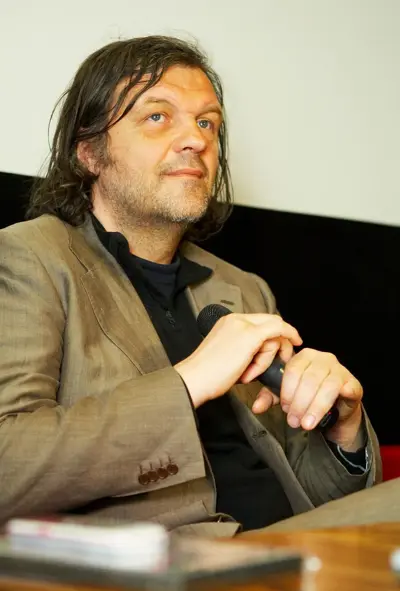
Emir Kusturica is a Serbian filmmaker, actor and musician. He also has French citizenship. He has been recognized for several internationally acclaimed feature films, as well as his projects in town-building. He has competed at the Cannes Film Festival on five occasions and won the Palme d'Or twice (for When Father Was Away on Business and Underground), as well as the Best Director prize for Time of the Gypsies.
