Lee Iacocca Quotes
I always go back to Harry Truman: Should we drop an atomic bomb to save 100,000 lives? That's a hell of a decision to make. Did he make that decision by himself? No, he had advisers.
Iacocca, Lee. Where Have All the Leaders Gone?. Scribner, 2007.

The Gallup poll at the time showed that 85% of the American public favored use of the atomic bomb.

There were some doubts the scientists developed after Germany had surrendered as Hitler had been their greatest fear. So they were briefed on the planned invasion of the Japanese mainland and the military medical preparations for treating and caring for ½ million serious wounded casualties. In addition, given the state of war, there was expected about the same number of American Military deaths. On top of that, there would be many more Japanese military casualties plus even more Japanese civilian deaths and wounded. The use of the Atom Bomb would save all those lives but have casualties of its own, but far fewer. At the time, surprising to most people now, the use of the atomic bomb was not an issue of controversy at all. There were no Congressman who questioned it, no newspapers which editorialized against the use of the bomb. There were not even any other counties which protested its use.

The only soldier ever so honored


Truman had just told Stalin about the new technology. Stalin had actually already known something about it as the result of Soviet espionage in the United States.

Although generally a right wing conservative, Clark today sounds like almost like an extreme leftist on the issue. At the time however, many thought that he had taken leave of his senses. He not only was completely contrary to bipartisan national policy but opposed by almost universal American public opinion. He is one of the very few significant American officials to oppose the war policies.


Dr. Libby worked with Enrico Fermi to create the first nuclear chain reaction to prove the feasibility of a nuclear bomb. She was the only female on the team.


Bethe and other European refugees joined American and British scientists at Los Alamos, NM, for the development of the atomic bomb.
This was one of several petitions that were sent to the President by groups of scientists who were working on the development of the atomic bomb. The major objective of the scientists was to demonstrate the power of the bomb before it was used. The President did not select this policy of demonstration as the invasion of the Japanese mainland was imminent and America only had two bombs—one a uranium and the other, plutonium. If the demonstration would not produce the unconditional surrender, then there would only be one weapon left and it would take months to produce another. This was the strongest argument against using up a bomb. It was somewhat borne out when the Japanese did not surrender after the first bomb had been dropped on Hiroshima. It took the second.

Her critics later started to ask whether the same wise God gave the atomic bomb to the Russians, and to the Pakistanis and the North Koreans.

When the doubts began to be expressed, the scientists were briefed on the planned invasion of the Japanese mainland and the military medical preparations for treating and caring for ½ million serious wounded casualties. In addition, given the state of war, there was expected about the same number of American Military deaths. On top of that, there would be many more Japanese military casualties plus even more Japanese civilian deaths and wounded. The use of the Atom Bomb would save all those lives but have casualties of its own, but far fewer. At the time, surprising to most people now, the use of the atomic bomb was not an issue of controversy at all. There were no Congressman who questioned it, no newspapers which editorialized against the use of the bomb. There were not even any other counties which protested its use.

Actually, there are many in politics who to this day castigate Truman for his decision, but for Bloomberg’s generation and before, anyone would have pushed the button. And there are some who still fault Obama as technically, the U. S. had no right to violate Pakistani airspace and kill a resident of their state without any due process in the U. S. or Pakistan. Bloomberg would have easily pushed that button, but there are many officials who warned against it, and earlier Presidents—George W. Bush and Bill Clinton who did not authorize assassinations in foreign (allies) countries.

“This” referred to the money to finance the Truman Doctrine of containment of aggressive Communism. There was already a Red Scare in the nation and Vandenberg realized that the only way his Republican Colleagues and the Conservative Democrats would appropriate the money was if there was public demand, and exaggerating the communist menace would scare the country sufficiently to move Congress. Truman took Vandenberg’s advice. On March 12, 1947, Truman delivered a speech to a joint session of Congress and did “scare hell” out of the country. The money for the Truman Doctrine came fourth.
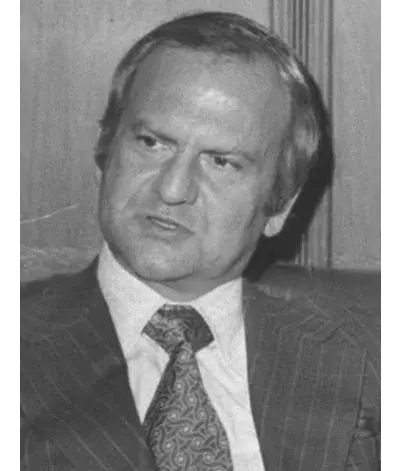
Lido Anthony "Lee" Iacocca was an American automobile executive best known for the development of the Ford Mustang and Ford Pinto cars while at the Ford Motor Company in the 1960s, and for reviving the Chrysler Corporation as its CEO during the 1980s. He was president and CEO of Chrysler from 1978 and chairman from 1979, until his retirement at the end of 1992. He was one of the few executives to preside over the operations of two of the Big Three automakers.
