A. B. Yehoshua Quotes
I admit I think it is immoral for Jews to live in the Diaspora.
Yehoshua, A. B. Address at the American Jewish Committee Centennial. American Jewish Committee, 1 May 2006.


Mr. Brandeis was Louis D. Brandeis, first Jewish Supreme Court Justice and one of the leading Zionist world leaders. Theodor Herzel is generally credited with being the father of Zionism but his treatise was written in 1895. Four years earlier, Blackstone, a Methodist Evangelical Minister, had drafted what has come to be called the Blackstone Memorial, which was a petition to President Benjamin Harrison to have American foreign policy work to return the Jews to Palestine where they would have a state and government. The petition was signed by over 400 notables. Straus, Brandeis and other Jewish Zionists credited Blackstone even though history has almost forgotten him. See {614860} for quotes from the Blackstone Memorial.


He also expressed his pleasure with the British Balfour Declaration granting the Jews their own country in part of Palestine ({594001}). Wilson had earlier committed himself to support the Zionist claim for Palestine. See {585124}.


Prior to 1948 and the establishment of the state of Israel, there were large number of Jewish refugees who were stateless and, regardless of whatever moral rights they may have had, there was no politi.cal mechanism to enforce or claim these rights. For example, in 1956 Nassar expelled most of the Egyptian Jewish population. It was only the existence of Israel that gave these people the right to come to Israel and not depend on the good will of the world to help them as refugees. The difficulty for most refugees is that there is no state to demand, support, and enforce their rights.

The advocacy of the Jewish Return to the Holy Land was not first suggested or stated by European Jewish Zionists. Brightman was not only the first Christian to urge the return of the Jews, but the secon person of any faith to suggest it. He was only preceded by a Jewish refugee from the Spanish Inquisition--Joseph Nasi in 1561.

This quotation is very surprising for most people. Reading the text alone, most of us would assume that it came from someone when the Zionist movement was fighting for a Jewish homeland in what is now Israel. Or just before the UN decision in 1947 to partition Palestine. However, it came from one of our founding fathers in Colonial times. Adams was by no means the only Founding Father with this point of view. Fundamentalist Protestants have put much credence in God’s granting the area for the Jewish People—then as today.


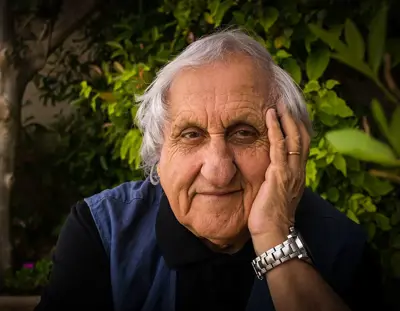
Abraham B. Yehoshua is an Israeli novelist, essayist, and playwright, published as A. B. Yehoshua. The New York Times called him the "Israeli Faulkner".
