Wilfred Burchett Quotes
Hundreds and hundreds of the dead were so badly burned in the terrific heat generated by the bomb that it was not even possible to tell whether they were men or women, old or young.
Burchett, Wilfred. "The Atomic Plague." Daily Express, 5 Sept. 1945, p. 1.


Jackie Kennedy used this quotation in the last letter she wrote from the White House. It was to Khrushchev.


During the meltdown of the Japanerse nuclear reactors at Fukashima, American sailors were deployed to provide critical assistance fram an American aircraft carrier in the area. They played a significant role in getting the reactors under control. Many of the Japanese at the emergency area had suffered serious illness from the radiation exposure abd a number died. The crew of the aircraft carrier had developed a highly unusual prevelance of serious illness assocated with radiation exposure. The U. S. Defense Department was "styding the matter" but had not decided that the unusual illness patern was related to their assignment assisting in th emergency. A number of the sailors had come to japan and asked for damages from the Raactor company which like most American Corporations would not do or say anything. The Japanese government also was silent on the issue when the sailors came to Japan, However, this former prime minister felt so strongly that he visited the Sailors and took up their cause in letting the Japanese public know what had happened and how the government and the electic company were acting. This was Koizumi's tearful response to the press covering the saolors and their request.

On that single day, 27,000 French Soldiers were killed in battle. The French Generals, with little understanding of the then modern weapons and their power, sent whole divisions on a bayonet charge and they were just mowed down by the latest German versions of machine guns. They assumed that if they failed to take a German position defended by machine guns, it was only because they had not sent enough men to make the charge. Each successive failure produced another charge with even more men.


Although the Yugoslav casualties were horrific, they inflicted great casualties on the Germans who lost more men fighting the Yugoslavs than they lost to any other of the allies except the Russians.

Bombing had reached the point where conventional bombing raids on industrial cities like Tokyo and Hamburg produced even more civilian casualties than did the atomic bomb at Hiroshima. Tibbets’ view, through the lens of hindsight, was developed by many of the Allied servicemen who had been forced into war by expansionist and militaristic nations like Japan and Germany both of which placed much of their war material manufacturing capability in the midst of their otherwise civilian cities. Both brutally violated the laws of war and committed atrocities many times over before the allies began retaliating. There are still some who believe that it was wrong to drop the atomic bomb on Japan. Some even feel that the mass bombing of Japanese and German cities in retaliation and in furtherance of the war effort was morally wrong. But at the time, the millions of casualties anticipated in the invasion of the Japanese mainland, persuaded virtually every American soldier and civilian that there was nothing wrong with use of the Atomic bomb, and many saw it as an absolute Godsend to prevent all the American and Japanese causalities that would have come otherwise. Many scholars remark on how it was virtually impossible to find any significant number of misgivings before or just after Hiroshima. Tibbet’s view was typical.
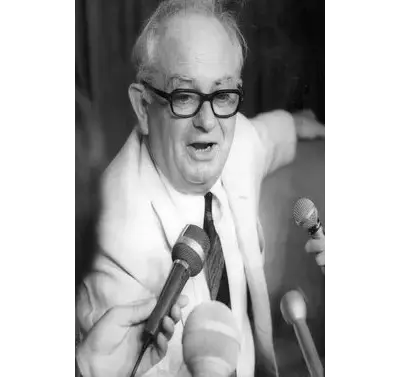
Wilfred Graham Burchett was an Australian journalist known for being the first western journalist to report from Hiroshima after the dropping of the atomic bomb, and for his reporting from "the other side" during the wars in Korea and Vietnam.
