John C. Calhoun Quotes
How can this full, perfect, just and supreme voice of the people, embodied in the Constitution, be brought to bear, habitually and steadily, in counteracting the fatal tendency of the government to the absolute and despotic control of the numerical majority?
Calhoun, John C. A Disquisition on Government. Edited by Richard K. Crallé, A.S. Johnston, 1851.


Describing the concept of the House of Representatives:

Statement regarding the situation the Mormons encountered where the majority of the citizens in the areas that they inhabited were not only opposed to Mormonism but felt it moral to attack, harass and even murder Mormons. Because the bigots were in the majority, the politicians and officials were loath to protect the Mormons. In Mormon religious prophesy, before the Second Coming of Christ the Mormons must settle in Zion and the Jews in Israel. So the persecution preventing them from settling in Zion was the work of Satan to prevent Christ’s coming.


His faction won on the House and lost with respect to the Senate.


Despite his warning---and that of others—all that they could get agreement upon had each of these three weaknesses. After winning the American Revolution, the new country found the Articles of Confederation and the Continental Congress completely inadequate and finally in 1787 there was a Constitutional Convention held in secret in Philadelphia to overcome the weaknesses of the existing structure of which the warnings of Rush were three of the problems that had to be fixed.


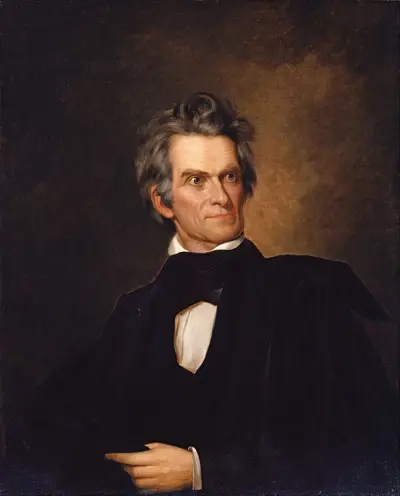
John Caldwell Calhoun was an American politician and political theorist from South Carolina who held many important positions including being the seventh vice president of the United States from 1825 to 1832, while adamantly defending slavery and protecting the interests of the white South when its residents were outnumbered by Northerners. He began his political career as a nationalist, modernizer, and proponent of a strong national government and protective tariffs. In the late 1820s, his views changed radically, and he became a leading proponent of states' rights, limited government, nullification, and opposition to high tariffs. He saw Northern acceptance of those policies as a condition of the South remaining in the Union. His beliefs and warnings heavily influenced the South's secession from the Union in 1860–1861.
