Charles de Gaulle Quotes
How can one conceive of a one-party system in a country that has over two hundred varieties of cheeses?
Charles De Gaulle, 1890-1970, French President, Attributed
Sourced by: Eigen's Political and Historical Quotations

12 years later, James Madison used a similar expression at the Constitutional Convention.


Tito did not realize how right he was. The class issues were relatively easy to resolve into a unified nation, but the ethnic, national, and religious difference and historical hatreds and conflicts were held together during Tito’s lifetime, as he was a very strong leader committed to multiculturalism and imposed it on all of Yugoslavia. However, when he did in 1980, Yugoslavia rapidly flew apart into ethnocentric independent cultures which then went to war with each other.
There was no semblance of democracy on Zaire. When he was more candid, Mobutu opposed democracy for Africa. See {628027}.

DeLay had been forced to resign from his leadership position when he was criminally indicted. Months later after his former aids admitted criminal activity, he resigned from the Congress but claimed innocence. Then he was convicted. Always an extreme partisan, he was firm in his disdain for Democrats and bipartisanship or compromise of any kind.

By secret societies, de Tocqueville meant societies or organizations where the membership was secret. He was not referring to organizations like the Masons which had secret oaths and rituals. Secret societies had historically been destabilizing forces in societies. At the time this was written, there were no secret societies in America, but in 1855 a major one developed—The American Party whose members were better known as “Know Nothings” as when they would be asked anything about the party and its organization of beliefs, they would claim that the knew nothing. They were virulently anti-immigrant and anti-Catholic. Subsequently, there have been secret organizations in American politics from time to time, but they have generally been few compared to other countries, and their influence was not long lasting. Most recently, quirks in legal decisions and their interaction with the Constitution have produced non profit organizations which are financed and influenced by unknown people. The major officials of the organizations are known but the members and contributors are secret. These organizations then operate campaigns, most often to attack and damage the reputation of politicians running for political office—most frequently, the Presidency.

“Personal government” meant to him charismatic individuals and demagogues who came to power in a republic and led it into a dictatorship. As opposed to representatives of political parties where a single individual could not control everything. However, this was before Adolf Hitler and his political party—the Nazis—came to power by election and turned Germany into a dictatorship. It takes more than structure to preserve democracy.

See {613385} ,{588836}, {613381}, {613384}.


See Edmund Burke a similar phrase 12 years earlier.


There were many in England and America who thought that political parties or “factions” as the Americans called them were inimical to republican government. Smyth disagreed and thought parties necessary for freedom and democracy. Turkey at the time was an Islamic Empire that while in decline still controlled large parts of Europe and most of North Africa. However, the Sultan had absolute control over both “church and state”. He was like the Pope and the Holy Roman Emperor in one person, There was no freedom of thought or speech.

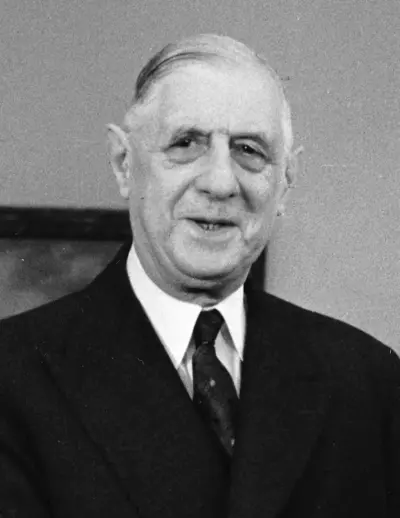
Charles André Joseph Marie de Gaulle was a French army officer and statesman who led Free France against Nazi Germany in World War II and chaired the Provisional Government of the French Republic from 1944 to 1946 in order to reestablish democracy in France. In 1958, he came out of retirement when appointed President of the Council of Ministers (Prime Minister) by President René Coty. He rewrote the Constitution of France and founded the Fifth Republic after approval by referendum. He was elected President of France later that year, a position to which he was reelected in 1965 and held until his resignation in 1969.
