Heinrich Heine Quotes
Honor to the French! They have taken good care of the two greatest human needs—good eating and civic equality.
Heinrich Heine, 1797-1856, German Writer & Critic, Journey from Munich to Genoa, 29
Sourced by: Eigen's Political and Historical Quotations


Although Holland was more egalitarian and fairer than most nations of Europe, it was not quite as desirable as Diderot described it. He only visited a part of Holland that was the most educated and affluent.


Marie Joseph Paul Yves Roch Gilbert du Motier


De Tocqueville was generally concerned about what he saw as an inherent conflict between freedom and equality. Efforts to produce equality can lead in some cases to impingements on some freedoms or rights. Unlimited free rights can produce inequality and a de facto autocracy. Even in modern times America is struggling to find a proper balance.

There was a March on Washington planned for 1942. However, the leaders were persuaded to call it off as the United States was in the midst of the Second World War. The military was segregated and so were the defense plants. FDR made some concessions regarding defense jobs but discrimination was still rampant. It would be 20 years later when the March actually took place with some of the same leaders organizing it.


Samuel Colt, 1814–1862, was the inventor and manufacturer of the six gun which was available for about half a cowboy’s monthly wage ($17) and, in effect, put all men on an equal footing in individual conflicts.


While France was in the midst of a violent revolution, the American debate was on the power and prestige of the Presidency. Then Vice President John Adams was a proponent of a strong executive. Most others were not.

Most politicians at the time agreed with this statement. In the next 25 years, the economic system grew less fair and when government officials tried to come up with remedies, they sublimated fairness, to economic recovery, and America went through a phase where fairness was far less important then it traditionally had been.
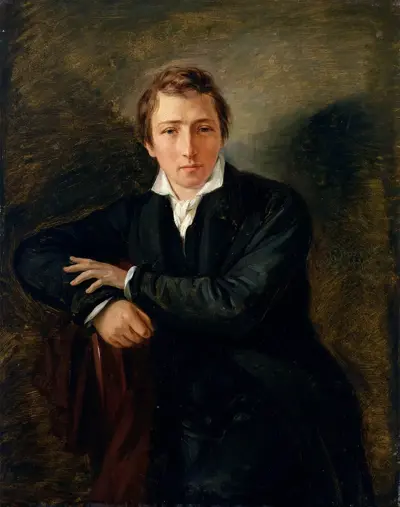
Christian Johann Heinrich Heine was a German poet, writer and literary critic. He is best known outside Germany for his early lyric poetry, which was set to music in the form of lieder (art songs) by composers such as Robert Schumann and Franz Schubert. Heine's later verse and prose are distinguished by their satirical wit and irony. He is considered part of the Young Germany movement. His radical political views led to many of his works being banned by German authorities—which, however, only added to his fame. He spent the last 25 years of his life as an expatriate in Paris.
