Theodore G. Bilbo Quotes
Hereafter, in any State, Territory, possession, or the District of Columbia, the marriage of a white person and a Negro or mulatto or a person who shall have one-sixteenth or more of Negro blood, or with a Mongolian or with a person who shall have one-sixteenth or more of Mongolian blood, shall be unlawful, and such marriage shall be void. Any person who is a party to any such marriage, or who knowingly performs a marriage ceremony to which such persons are a party, shall, upon conviction thereof, be punished by a fine of not to exceed $10,000 and by imprisonment of not to exceed ten years.
The bill never became law although it had quite a bit of support.
Theodore G. Bilbo, 1877-1947, Mississippi Governor (Democrat), U. S. Senator (Democrat, MS), Legislation Proposed as an Amendment to a Voting Rights Bill
Sourced by: Eigen's Political and Historical Quotations


Brigham Young, the Mormon Leader and Territorial Governor, was strongly opposed to Interracial sex. See {629150}. An earlier clause provided for loss of the rights to a slave if the master had sexual relations with the slave, something that no Southern State had ever done.


Bilbo was one of the worst racists who ever served in the Congress.


Note that Alabama not only had a law against miscegenation but with this constitution made it illegal for a legislature in the future to ever legalize miscegenation. After the Supreme Court made anti-miscegenation laws illegal, Alabama had to amend this part of its constitution.


Blacks were fighting and dying in WWII. They were equal when they were under fire, but otherwise not. The war was against fascist protagonists whose creed was inequality while the allies were upholding freedom and equality. But making that aspiration a reality was difficult.


The rich whites won the class war by splitting the poor and working class with race hatred and then coopting one half—the poor whites so that neither the poor whites or blacks obtained much and even into the 21st century the poor of the American South were the worst off of all the poor in America.

Billy Sunday was the most famous preacher of the day. Unlike the vast majority of white preachers, he not only preached to black audiences but exuded an atmosphere of friendliness and comfort around Blacks that amazed most. Most Black leaders thought Sunday was very good for race relations, but there were some critics like Grimke. Sunday was castigated by many racist whites for preaching to Blacks, but he did not go as far as to condemn or preach against racism and the discrimination of the day and he would not preach to an integrated audience. See {585416} for another critique.


Booth was the younger son of a very prominent Northern family of actors. His older brother was considered the greatest American actor, and the rest of the family were abolitionists and vehement Union supporters. They found young John’s views reprehensible.

There are few people today who could believe that a United States senator would castigate the head of a Federal Agency for spreading “racial equality propaganda.” But at the time—1943—the actions of Education Commissioner John W. Studebaker and his Assistant took remarkable courage.


He was advocating separation of the races.

Hale's "Church" was a White Supremicist violent, terrorist, organization. Hale himself was jailed for attemoting to assassinate a Federal Judge. This quotation is historically interesting as it shows the strange paranoid thinking of one of the American Ultra Right Wing Organizations in America at the beginning of the 21st century.

There was a huge amount of racial interbreeding during the early slavery times of America. Some was consensual as people will be people, but much was the rape of Black slaves my white masters—a concept that was never considered rape by law as one cannot commit a crime against one’s own property. The result after time was every possible combination of white/black mixture. There were names for many of the combinations: Quadroons were one fourth Negro. Octaroons, one-eighth. During and after reconstruction, for purposes of discriminatory law, who was a Negro? The Louisiana “one drop rule” said that if there was ANY trace of Negro ancestry, that person was a Negro and would be discriminated against. Of course, what would happen was that many mixed race children were light skinned and looked white and many were black and all shades in between. It was relatively easy for the lighter skinned “one drop” Negroes to pass as white especially if the left the state. But if anyone accused them of being Negro, they would have been guilty of committing crimes. Some in modern times have little comprehension of how the white plantation slave owners and other whitrd could condemn their own children to a second class life of vicious discrimination, but that is exactly what they did. The great irony here lies with the modern KKK, Nazi, and other White Supremacy Groups. They still hold to the “one drip rule for their viciousness. However, under the one drop rule, almost all of them would be Negroes if they went back far enough, and ALL ARE BLACK under the one drop rule as with modern DNA and genetic analysis, we now know that every human alive today emanated from a Black woman in Africa.

This classic quotation illustrates several things. First, the degree of racism that existed in 1944 in West Virginia. Second, not how young Robert Byrd immediately leaped from the possibility of integrating our fighting forces to interracial sex. That has been typical of white racism in America—a preoccupation with race and sex. Last, Byrd who became a member of the KKK, completely changed his mind over the year and ended up supporting the things that, as a youth were worse than the demise of the nation. He matured and grew on the race issue as much of the country did and ended as a strong supporter of equality and civil rights—including affirmative action.
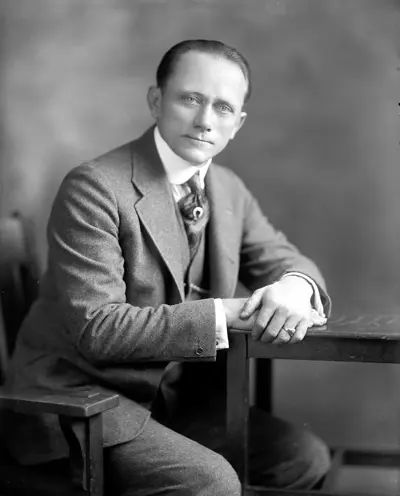
Theodore Gilmore Bilbo was an American politician who twice served as governor of Mississippi (1916–20, 1928–32) and later was elected a U.S. Senator (1935–47). A lifelong Democrat, he was a filibusterer whose name was synonymous with white supremacy—like many Southern Democrats of his era, Bilbo believed that black people were inferior; he defended segregation, and was a member of the Ku Klux Klan.
