William Blake Quotes
He who would do good to another must do it in Minute Particulars: general Good is the plea of the scoundrel, hypocrite, and flatterer, for Art and Science cannot exist but in minutely organized Particulars.
Blake, William. Jerusalem. W. Blake, 1804, pl. 55.


His army had been so successful that many of his men had all the riches they ever dreamed of and great glory as well. Some just wanted to slow down and enjoy the conquered lands where they had been received very cordially as Alexander’s “occupation” was much more benign than the Asian rulers had been. So some of Alexander’s men were critical of Alexander and in effect, Alexander said that the complaints are what a successful king should expect after so much success and popularity. This quotation was inscribed in Latin on the town-hall of Zittau, in Saxony during the reign of Frederick The Great. Politicians have been comforted by Alexander’s quotation even to modern times. Also, see {632232} for Voltaire’s version of Alexander’s statement.
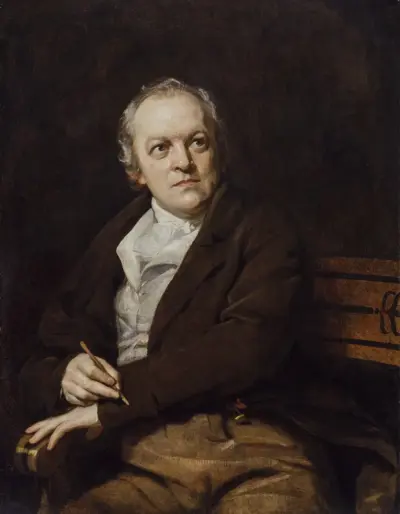
William Blake was an English poet, painter, and printmaker. Largely unrecognised during his lifetime, Blake is now considered a seminal figure in the history of the poetry and visual arts of the Romantic Age. What he called his prophetic works were said by 20th-century critic Northrop Frye to form "what is in proportion to its merits the least read body of poetry in the English language". His visual artistry led 21st-century critic Jonathan Jones to proclaim him "far and away the greatest artist Britain has ever produced". In 2002, Blake was placed at number 38 in the BBC's poll of the 100 Greatest Britons. While he lived in London his entire life, except for three years spent in Felpham, he produced a diverse and symbolically rich œuvre, which embraced the imagination as "the body of God" or "human existence itself".
