Aristotle Quotes
He who has conferred a benefit on anyone from motives of love or honor will feel pain, if he sees that the benefit is received without gratitude.
Aristotle. Rhetoric. Translated by W. Rhys Roberts, Clarendon Press, 1924, p. 1379a.


Jennings had been purchased by Webster and served as his personal butler. As such, and technically a free Black, Jennings had the run of Washington including the Capitol. Webster had freed Jennings with the understanding that Jennings would work off his purchase price. About a year before Jennings had fully worked off his freedom price, he organized a slave escape of Washington house slave by arranging for a ship, the Pearl, to take them North. He wrote his letter to Webster and then went to the docks where the slaves boarded the Pearl. At the last minute, he left the ship and returned to the Webster home feeling that he had given his word and to leave at that time would be dishonorable. The slaves sailed, but were caught by a posse shortly. Most of the slaves were sold as field hands to the deep South, but the white ship’s master, Daniel Drayton, was tried for stealing property. He was defended by Horace Mann, and fined an amount he could not pay and went to jail. The Pearl escape received much notoriety as the escapees were all very “privileged” slaves. Two years later in the Compromise of 1850, selling slaves on the open market was banned in Washington DC. Millard Filmore pardoned Drayton after 4 years in jail. Jennings completed his promise of service and was never prosecuted for his organization of the escape.


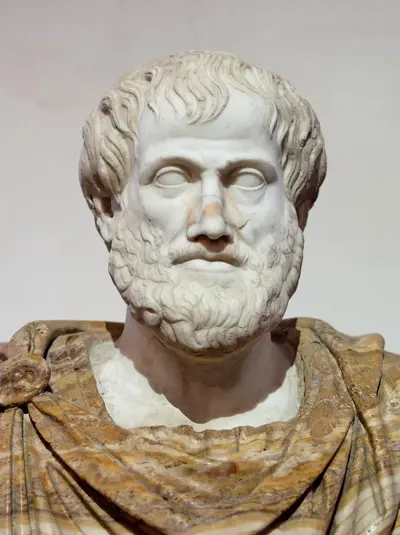
Aristotle (/ærɪˈstɒtəl/; Greek: Ἀριστοτέλης Aristotélēs, pronounced [aristotélɛːs]; 384–322 BC) was a Greek philosopher and polymath during the Classical period in Ancient Greece. Taught by Plato, he was the founder of the Lyceum, the Peripatetic school of philosophy, and the Aristotelian tradition. His writings cover many subjects including physics, biology, zoology, metaphysics, logic, ethics, aesthetics, poetry, theatre, music, rhetoric, psychology, linguistics, economics, politics, meteorology, geology and government. Aristotle provided a complex synthesis of the various philosophies existing prior to him. It was above all from his teachings that the West inherited its intellectual lexicon, as well as problems and methods of inquiry. As a result, his philosophy has exerted a unique influence on almost every form of knowledge in the West and it continues to be a subject of contemporary philosophical discussion.
