Seneca the Younger Quotes
He, who decides a case without hearing the other side, though he decides justly, cannot be considered just.
Seneca, Lucius Annaeus. Tragedies, Volume I. Translated by Frank Justus Miller, Harvard University Press, 1917, p. 247.


Prosecutors, even ones who are frequent lawbreakers themselves violating defendant's rights or illegally manipulating trials, are reluctant to be officially found to have done so. Many politicians start their political careers as prosecutors and then rise to higher office. If it is officially found that they had abused a defendant and violated the law, it can be detrimental to their careers. So in many states, they have placed barriers making it much harder for an improperly convicted person to even get a court hearing. The cost to society however is that they are never accountable, and people have been wrongly imprisoned and cannot even get a hearing to prove that they were the victims of official misconduct. The rationale for these rules that prevent victims from obtaining fairness and justice is finality—the concept that there should be some end to the process of appeals so justice can be said to have been done. It prevents a kind of closure for many of the victims of crimes and their families if the guilty perpetrator is constantly appealing or can do so.


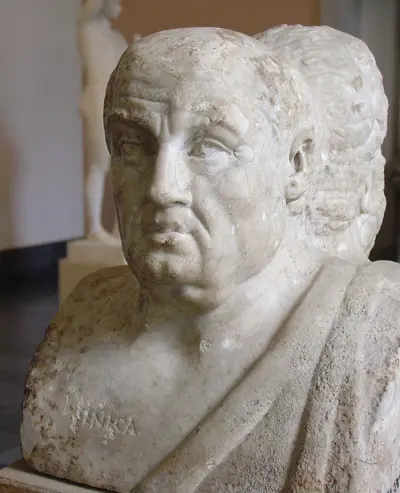
Lucius Annaeus Seneca the Younger (/ˈsɛnɪkə/; c. 4 BC – AD 65), usually known as Seneca, was a Roman Stoic philosopher, statesman, dramatist, and in one work, satirist from the Silver Age of Latin literature.
