Hugo Black Quotes
From the very beginning, our state and national constitutions and laws have laid great emphasis on procedural and substantive safeguards designed to assure fair trials before impartial tribunals in which every defendant stands equal before the law. This noble ideal cannot be realized if the poor man charged with crime has to face his accusers without a lawyer to assist him.
Black, Hugo. Gideon v. Wainwright, 372 U.S. 335. Supreme Court of the United States, 1963, p. 344.


This quotation is a great example of the difficulty of deciding some of the major Constitutional issues. Most reasonable people believe that Rehnquist certainly has a point. On the other hand, critics observe that this quotation essentially says that it is OK to convict an innocent person if it cost too much or be too much trouble to do so. Reasonable people would also agree that this objection has much merit also. So the judicial system is stuck with deciding when the cost or trouble is too much. There will never, can never, be a clear cut answer.


Americans are divided as to whether this should be encouraged and helped or not.


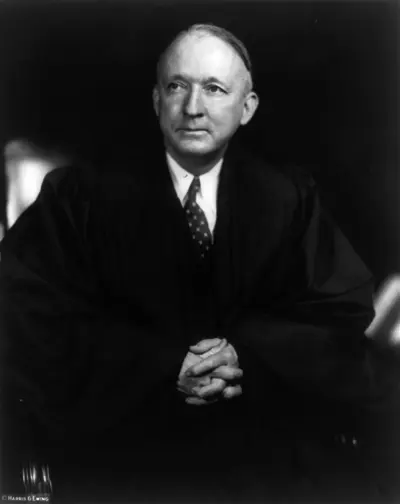
Hugo Lafayette Black was an American lawyer, politician, and jurist who served as a U.S. Senator from 1927 to 1937 and as an Associate Justice of the Supreme Court of the United States from 1937 to 1971. A member of the Democratic Party and a devoted New Dealer, Black endorsed Franklin D. Roosevelt in both the 1932 and 1936 presidential elections. Having gained a reputation in the Senate as a reformer, Black was nominated to the Supreme Court by President Roosevelt and confirmed by the Senate by a vote of 63 to 16 (six Democratic Senators and 10 Republican Senators voted against him). He was the first of nine Roosevelt appointees to the Court, and he outlasted all except for William O. Douglas.
