Ito Hirobumi Quotes
He [the Japanese Emperor] shall not be made a topic of derogatory treatment nor one of discussion.
To this day, Japanese are generally very circumspect about criticizing the emperor and he is rarely the subject of public discussion.
Hirobumi Ito, 1841-1909, Japanese Prime Minister, Diplomat & Advisor to the Japanese Emperor, Commentaries on the Constitution of the Empire of Japan, 1889
Sourced by: Eigen's Political and Historical Quotations


Marlette was inundated by complaints from Muslims for his 2002 cartoon depiction of Muhammad driving a Ryder rental truck like the one used by convicted Oklahoma City terrorist bomber, Timothy McVeigh. The caption was, “What would Muhammad drive?” He was front-page news in Saudi Arabia and other Islamic nations. He received death threats. The Council on American-Islamic Relations and the Muslim World League both demanded an apology. Marlette refused. When he was killed in an automobile crash in July of 2007, many Muslims believed that this was the retribution of Allah.
_0_thumbnail_47x47.jpg "Portrait of Robert Hunter")
The Colonial Pennsylvania Governor had the power and used it to forbid the publication of letters from the King to the Governor. This sort of censorship happened all the time in most of the world, England and in Colonial America. And this is exactly the type of thing that the Founding Fathers wanted to prevent in passing the 1st Amendment and ensuring absolute freedom of the press.


In 1948 Japanese Emperor Hirohito convened the Japanese Diet. By tradition the Emperor would receive the bows and homage of the leaders of the upper and lower houses in a special audience room before the ceremony. Matsumoto did not so greet Hirohito provoking a scandal of sorts. However, in the past, Hirohito had been worshipped as a living God. When his subjects attended an audience, they would bow low and leave walking backwards or sideways so as never to insult the Emperor be showing him their backs. The court maneuver was known as the “crab walk.’ However, under the 1946 Constitution the Emperor had become a mortal, human “symbol” of the state. Matsumoto was purged from politics with the active assistance of the American Occupation authorities. No one was willing to take the new Constitution both literally and seriously.

The libel and slander laws in England were then, and are today, dramatically different from those of the United States in two fundamental ways: In America truth is an absolute defense; in England you can’t say true things about people which are personally libelous. Second, in America politicians and public figures are not entitled to a verdict even if the statements are inadvertently or possibly false. Without the Constitutional protections of freedom of speech and freedom of the press, the reputations of people including public figures are given much more weight in England than in America.


This is the most formalized and sophisticated compendium of laws of the so-called “barbaric peoples” of Europe. The compilation was in many ways a documentation of the traditional laws of the Visigoths that had evolved over hundreds of years.

Usually Jefferson was the strongest voice for rights with no loopholes. However, he wanted to have a slander exception as this quote shows. However, the issue is what happens if a government official or an agency believed that it has been falsely slandered? If Jefferson’s proposal was accepted completely, the government and officials could sue someone who published negative information that they thought was false. Our supreme court has limited the exception to private parties who were NOT “public figures” unless the publisher knew the information was false and proceeded anyway for malicious reasons.
England and most other countries do not have such an exception and the press is very timid about criticizing the government or officials lest they make a mistake .
The word “printer” had a slightly different meaning then. In Jefferson’s time the printer was also the publisher, Benjamin Franklin was known as a printer but he not only published material but wrote much of it himself. This was typical. So Jefferson is concerned with the rights of the printer, the publisher and the writer.
The book was very critical of the way capitol punishment is meted out in Singapore. The Singapore Attorney General’s Office then claimed that the book had brought disrespect on the courts of Singapore by being so critical and tried him for “criminal defamation”. Shadrake was fined $30,000 and when he planned on publishing a second edition he was tried again and threatened with Jail. The fundamental problem is that if part of a nation’s government is corrupt, ineffective or incompetent and someone tells that to the public, there will certainly be less respect for the institution. So demanding respect, is tantamount to abandoning freedom of speech in general and criticism of the government in particular,

The evils of the time were even worse than in modern times. Most newspapers, journals, and periodicals were in 1835 actually owned and operated by political parties or people totally identified with political parties. In modern times, there are publications and blogs which are controlled by political forces, but most are not.


Samuel Langhorne Clemens, 1835-1910. Grant was the victim of more journalistic errors than most politicians as a number of his appointees turned out to abuse their position for their own gain. Often, Democratic leaning newspapers would claim the Grant was aware of the corruption, sharing in it or both, When there was later proof of Grant’s non involvement, most newspapers would never publish a retraction of correction.

This is a very important quotation. The reason is that the Secretary General of the UN backed off and did not support the absolute right of freedom of speech and expression. He favored allowing exceptions. In this case a film was made that was not only intellectually an attack on Islam but it was done in such a manner that most orthodox Muslims were insulted and offended that their Prophet and religion were both insulted in a blasphemous manner. It was a film that was very much in poor taste, insensitive and gross. One major difference between freedom of speech as interpreted by most countries and the United States is that most other nations do not allow and defend hate speech and material that insults a people or their religion or is blatantly blasphemous. The U. S. however protects anyone who blasphemously attacks anyone or any group for any reason. There are a few other nations that protect free speech absolutely but Germany, the United Kingdom, Israel, and India are considered major examples of democracy and freedom and yet they do not protect free speech absolutely. In most Muslim nations, whatever freedom of speech they might have does not apply to blasphemy where Islam is concerned. In most of the Arab nations, there is rank hypocrisy in that freedom of speech is tolerated and protected if there is a blasphemous attack on any other religion such as Christianity, Judaism, Buddhism, or Bhai. This kind of difference on human rights between the U. S. and the UN causes many Americans to oppose the US participation in UN operated courts and projects to protect human rights. Few Americans would favor being a part of an international court system where an American could be convicted of blasphemy for what he had written or said. Essentially, the Secretary General has taken a stand against the United States Constitution and the values of most Americans and many other people of the world like Denmark, or Norway. Offensive and insulting speech is the only kind of speech that needs protection. If speech offends no one, there is no need for its protection.
This principle was incorporated into American law by the Supreme Court 1964 decision in Sullivan v. New York Times, where this argument drove the opinion.


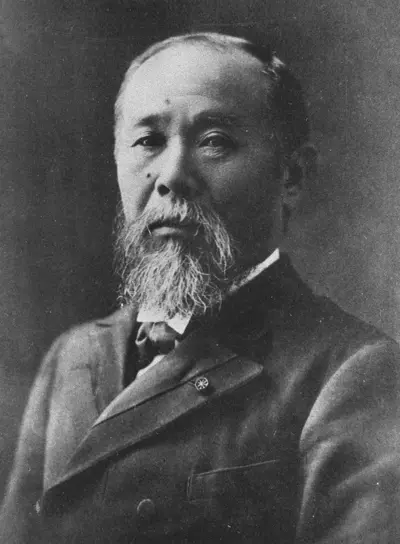
Duke Itō Hirobumi was a Japanese politician and the first Prime Minister of Japan. He was also a leading member of the genrō, a group of senior statesmen that dictated Japan's policies during the Meiji Era.
