Gouverneur Morris Quotes
He asks how the evil is to be remedied. I tell him that there seems to be little chance for avoiding the extremes of despotism or anarchy; that the only ground of hope must be the morals of the people, but that these are, I fear, too corrupt.
Morris, Gouverneur. A Diary of the French Revolution. Edited by Beatrix Cary Davenport, vol. 1, Houghton Mifflin Co., 1939, p. 149.


The railroad monopolies had been abusing their workers for years and this strike brought most of the railroads to a standstill. Since the public and much economic activity depended on the railroad, the Railroad managers tried to get the government to use the U. S. Army to break the strike rather than negotiate with the union.


This is only one of many anti-American and anti-Israeli and anti-Semitic passages in the text. It is typical of much of the Wahhabi literature which also supports jihad and violence. Much of the funding for the Wahabbi comes from the Saudi Arabian Government and members of the Saudi Royal Family. There is total censorship in Saudi Arabia and nothing gets preached or printed if the Saudi government wishes otherwise. However, most of the imams in Saudi Arabia are Wahhabi and are paid by the government. The Royal Family’s only fear of losing power is if the Islamic clerics claim that the government is not supportive of Islam. They spend much money to buy their lack of opposition to the monarchy. The government position however is contrary to these hate-filled textbooks.


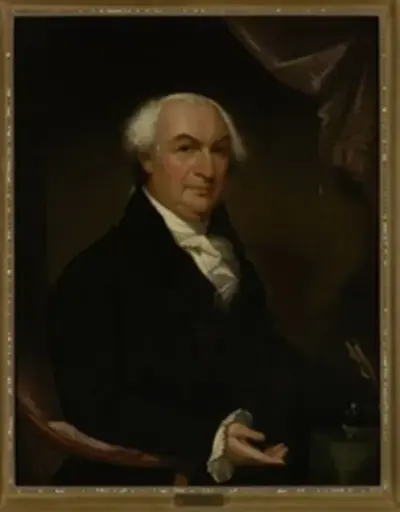
Gouverneur Morris was an American statesman, a Founding Father of the United States, and a signatory to the Articles of Confederation and the United States Constitution. He wrote the Preamble to the United States Constitution and has been called the "Penman of the Constitution." In an era when most Americans thought of themselves as citizens of their respective states, Morris advanced the idea of being a citizen of a single union of states. He was also one of the most outspoken opponents of slavery among all of those who were present at the Constitutional Convention. He represented New York in the United States Senate from 1800 to 1803.
