Margaret Atwood Quotes
Having been brought up among the biologists and having followed various debates about ways to improve the human template and other debates about the true nature of our nature, I began seriously to wonder: What if? We hold in our hands a tool that is more powerful - for good or ill - than any we have wielded before.


Science was progressing rapidly and Congress and the other legislatures of the world had not kept up with the scientific, legal or ethical implications of the progress. The result was that once a new technique was perfected, all the institutions were caught :flat footed, and sought out bioethicists to advise them.


What he thought was conceivable in the 1970’s seemed almost certain to come to pass 30 years later. Scientists had already altered the evolution of various plants and animals, and the complete human genome had been sequenced. The question will be not whether man will be able to control and modify his own evolution, but how should this be done and who should decide it. We have realized that man has already—unintentionally—altered the evolution of many species from passenger pigeons which are now extinct and the dog which coevolved with humans. Arguably, man’s development of the ability to control his own evolution is an evolutionary development itself. One great question for society is whether it is better to alter evolution unknowingly or in a planned, relatively controlled manner. For man to participate in the design of human evolution will be the nightmare of the Creationists who insist that evolution is too complicated to be somewhat of a random process and that there must be a designer who they assume is God. When man becomes the designer, that will be very disturbing. For most theologians, there will be little difficulty with the notion that God chose the mechanism of evolution and chose humans to give the intellect and knowledge to implement and design the evolutionary process.
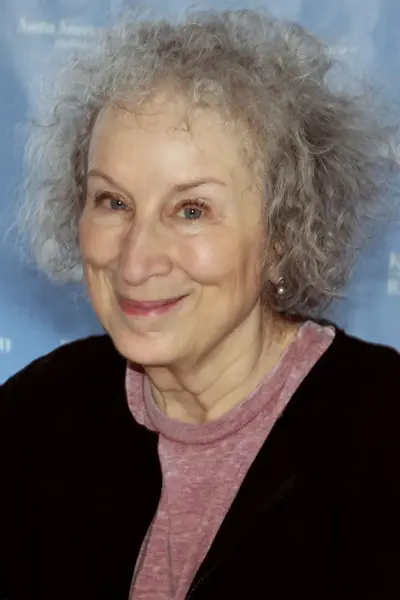
Margaret Eleanor Atwood CC OOnt CH FRSC is a Canadian poet, novelist, literary critic, essayist, teacher, environmental activist, and inventor. Since 1961, she has published 18 books of poetry, 18 novels, 11 books of non-fiction, nine collections of short fiction, eight children's books, and two graphic novels, as well as a number of small press editions of both poetry and fiction. Atwood has won numerous awards and honors for her writing, including the Booker Prize (twice), Arthur C. Clarke Award, Governor General's Award, Franz Kafka Prize, Princess of Asturias Awards, and the National Book Critics and PEN Center USA Lifetime Achievement Awards. A number of her works have been adapted for film and television.
