James D. Watson Quotes
No one may have the guts to say this, but if we could make better human beings by knowing how to add genes, why shouldn't we?
Watson, James D. A Passion for DNA: Genes, Genomes, and Society. Cold Spring Harbor Laboratory Press, 2000.


What he thought was conceivable in the 1970’s seemed almost certain to come to pass 30 years later. Scientists had already altered the evolution of various plants and animals, and the complete human genome had been sequenced. The question will be not whether man will be able to control and modify his own evolution, but how should this be done and who should decide it. We have realized that man has already—unintentionally—altered the evolution of many species from passenger pigeons which are now extinct and the dog which coevolved with humans. Arguably, man’s development of the ability to control his own evolution is an evolutionary development itself. One great question for society is whether it is better to alter evolution unknowingly or in a planned, relatively controlled manner. For man to participate in the design of human evolution will be the nightmare of the Creationists who insist that evolution is too complicated to be somewhat of a random process and that there must be a designer who they assume is God. When man becomes the designer, that will be very disturbing. For most theologians, there will be little difficulty with the notion that God chose the mechanism of evolution and chose humans to give the intellect and knowledge to implement and design the evolutionary process.


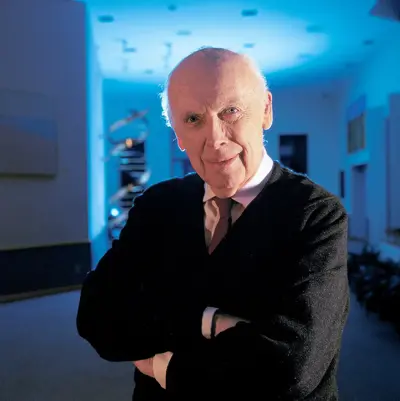
James Dewey Watson KBE is an American molecular biologist, geneticist and zoologist. In 1953, he co-authored with Francis Crick the academic paper proposing the double helix structure of the DNA molecule. Watson, Crick and Maurice Wilkins were awarded the 1962 Nobel Prize in Physiology or Medicine "for their discoveries concerning the molecular structure of nucleic acids and its significance for information transfer in living material". In subsequent years, it has been recognized that Watson and his colleagues did not properly attribute colleague Rosalind Franklin for her contributions to the discovery of the double helix structure.
