Henry McMahon Quotes
Great Britain is prepared to recognize and support the independence of the Arabs in all the regions within the limits demanded by the Sherif of Mecca.
The British were trying to enlist the aid of the Arabs in fighting against the Ottoman Turks who had controlled all of the Middle East in the name of Islam. There was another clause in the letter excepting the areas that Britain had agreements with France and Russia. However, unknown to the Sherif there was the Sykes-Picot treaty which had secret clauses giving Syria, Damascus and other prime areas to the French. The English could not guarantee independence to much of the Arab Mideast.
Henry McMahon, 1862-1949, British High Commissioner in Egypt, Letter to Ali ibn Husain, Sherif of Mecca, 1915
Sourced by: Eigen's Political and Historical Quotations

The Germans allied themselves with the Islamic insurgency of the day as a strategic maneuver. The Grand Mufti of Jerusalem broadcast propaganda from Nazi radio in Berlin and was dispatched to organize Muslim fighters in Iraq. Fascism was introduced into the Middle East and the Arabs and Persians saw it as a natural extension of their authoritarian and highly prescriptive forms of religious and civil government. 60 years later, there would be Islamic Fascists throughout the Middle East in control or vying for control of many of the countries.

The British Empire Controlled Most of the Middle East in the 1920s, and they presided over most of the creations of states in the region. Churchill was a major figure in British Colonial policy. The natural borders tended to follow rivers, mountain ranges, lakes other irregular geographical elements. Borders of straight lines were almost always artificial in that men (and a few women) decided upon them as a convenience. Churchill was personally involved in much of the line drawing for borders.

This newspaper was an English language organ published by General Allenby’s British and Allied forces in the Middle East. Prior to the war, the Middle East was all part of the Ottoman Empire. However, the Ottoman Turks sided with Germany in WWI and their Middle East dominions were targets for the allied military strategy.

This Proclamation was issued upon arrival of the British occupying imperial army in present day Iraq. The English policy makers like the Bush administration almost a century later were expecting a more welcoming reaction. See {585250}.
This Proclamation was issued upon arrival of the British occupying imperial army in present day Iraq. The English policy makers like the Bush administration almost a century later were expecting a more welcoming reaction. See {585250}.


The French and English, with larger numbers and more experienced troops and officers, wanted the American units to come under the command or their officers and be integrated into the allied army. However Wilson established the tradition that American troops fighting abroad most always fight as an American Army under American Command. Although resented then and into the 21st century by America’s allies who are expected to fight under American command, it is a tradition that no American major politician has seriously challenged since then.

He later settled for Home Rule in the Irish Treaty of 1922

Western Saudi Arabia. Although his claim to rule all Arabs was never recognized by other nations and he was deposed by other Arabs in 1924, his sons Feysal I and Abdullah ended up ruling Iraq and Transjordan.

At the time, Palestine was technically Turkish territory. Turkey was one of the defeated axis powers in World War I. England, as part of the World War I peace treaties, had control over Palestine as well as most of the rest of the Middle East.

While Adams was a little hyperbolic in his claim, the vast majority of the colonists who were protesting British policy and administration in 1775 were seeking reform, not separation from England. But what a difference a year made! British reaction radically changed the objectives of most colonists. See George Washington {613171} for a similar view.

The Japanese diplomats of the day maintained that in addition to the special needs of Japan {616181} and {616183}, the “white” powers had colonies and if they left Korea, white nations would simply come in and annex it as a colony. The Japanese saw this as a double standard—white nations could have colonies but Asian nations, no. In reality, Colonialism was fading even in the white nations but Japan was coming to it anew. Their timing was on the wrong cusp of history. The example of Ireland transformed to an independent republic shortly thereafter. For colonialism, the handwriting was on the wall but the Japanese preferred not to look at the trend but the then status quo.

He attempted to broker an agreement between India’s Muslims and Hindus as to the form of the successor government.


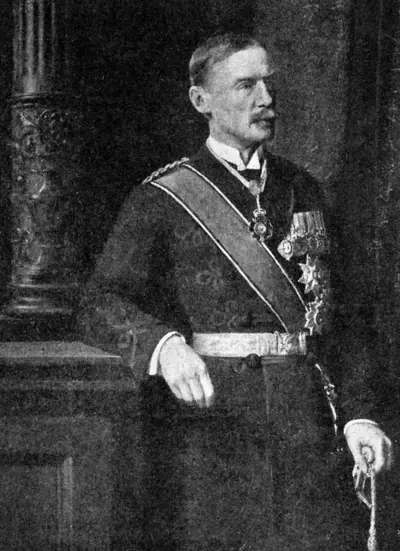
Lieutenant Colonel Sir Vincent Arthur Henry McMahon GCMG GCVO KCIE CSI KStJ was a British Indian Army officer and diplomat who served as the High Commissioner in Egypt from 1915 to 1917. He was also an administrator in the British Raj and served twice as Chief Commissioner of Balochistan. McMahon is best known for the McMahon-Hussein Correspondence with Hussein bin Ali, the McMahon Line between Tibet and India, and the Declaration to the Seven in response to a memorandum written by seven notable Syrians. After the Sykes-Picot Agreement was published by the Bolshevik Russian government in November 1917, McMahon resigned. He also features prominently in Seven Pillars of Wisdom, T.E. Lawrence's account of the Arab Revolt against the Ottoman Empire during World War I.
