Thomas Paine Quotes
Government, even in its best state, is but a necessary evil; in its worst state, an intolerable one.
Thomas Paine, 1737-1809, British American Political Philosopher, Common Sense
Sourced by: Eigen's Political and Historical Quotations


This quotation not only illustrates the typical Southern attitude at the time as the issue of Slavery began to be the subject of Federal governmental debate, but it also illustrates the incredible party flip flops over time. Ritchie was one of the leading Democratic Politicians of his day, and it was the Democrats who were opposed to Government. However, people without a knowledge of early American History might think that this quotation came from right wing Republicans of the early 21st century. By then, it was the Democrats who saw the important role of government. The Democrats were then extreme enemies of the Federal Government and were against freedom for Blacks and their rights, that the Republican Party was created and used government more than most Americans ever thought possible, ended slavery and permitted Negro voting and equality. Almost 200 years later it was the Democrats who were espousing the old Republican Views, and the Republicans holding the old Democratic view of government and adopting a more passive view on racial equality and justice.


The Bank was privately owned. Jackson was a major opponent of the Bank. See his description {630650} .


Roosevelt, after refusing to run for a third term in 1908, decided to run in 1912:


Dean had lived through the horrors of the Nixon Administration, so this was a very serious accusation from a Republican no less. By the end of the George W. Bush presidency, there were many Republicans who had repudiated Bush.


His views are a mix of modernism and fundamentalism. He favors democracy and elections but also favored the Taliban destroying the great ancient Buddha statues when he was called an idol worshipper for urging the preservation of art.
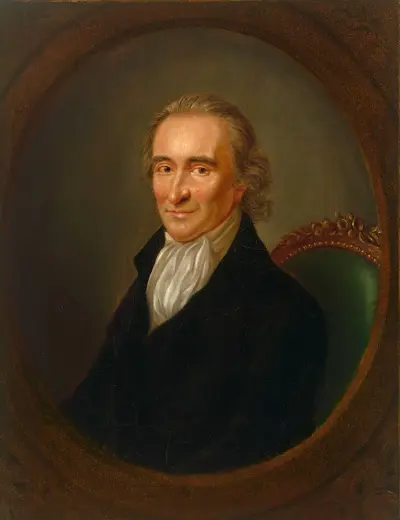
Thomas Paine was an English-born American political activist, philosopher, political theorist, and revolutionary. He authored Common Sense (1776) and The American Crisis (1776–1783), the two most influential pamphlets at the start of the American Revolution, and helped inspire the patriots in 1776 to declare independence from Great Britain. His ideas reflected Enlightenment-era ideals of transnational human rights. Historian Saul K. Padover described him as "a corsetmaker by trade, a journalist by profession, and a propagandist by inclination".
