Thomas Paine Quotes
Society is produced by our wants and government by our wickedness….government in its best state is a necessary evil; in its worse state an intolerable one.
Thomas Paine, 1737-1809, British American Political Philosopher, Common Sense
Sourced by: Eigen's Political and Historical Quotations


Even in democracies, governments sometimes adopt programs or policies which are not those preferred by a majority of the people. Frequently, a program which has initial public support losses that support yet the government “stays the course”. Legislative and Constitutional complexities sometimes will allow minorities to dictate practices and policies that do not have majority support. In pseudo-democracies and authoritarian regimes the people have little to say in government activities. The result is that there is often a distinction between a society and its government. In many cases foreign opinion of a government and its people are different. America is the classic example, where Americans and American society is much more popular in many nations than is the United States government.

He was referring to the public unrest and dissatisfaction when an middle, poor or impoverished class is ground down by rigid interpretation and contract laws so that people in debt can rarely get out. He argues that this was a stark reality before most revolutions and a primary cause.

1st Earl of Beaconsfield. This is one of the favorite quotations of those who oppose a strong federal role in education.


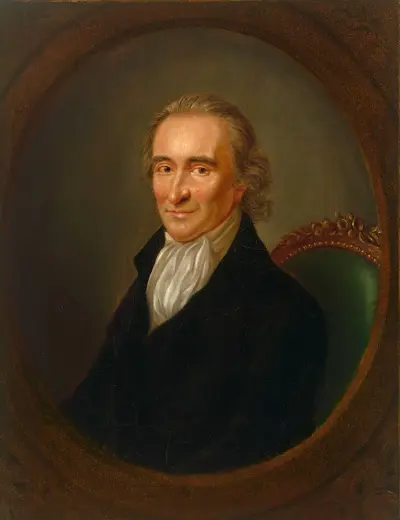
Thomas Paine was an English-born American political activist, philosopher, political theorist, and revolutionary. He authored Common Sense (1776) and The American Crisis (1776–1783), the two most influential pamphlets at the start of the American Revolution, and helped inspire the patriots in 1776 to declare independence from Great Britain. His ideas reflected Enlightenment-era ideals of transnational human rights. Historian Saul K. Padover described him as "a corsetmaker by trade, a journalist by profession, and a propagandist by inclination".
