Calvin Coolidge Quotes
Government and business should remain distinct and separate, one directed from Washington, the other from New York.
Calvin Coolidge, 1872-1933, 30th President of the United States (Republican, MA), Quoted by Paul Johnson, The Calvin Coolidge Presidency & American Society, C-SPAN, November 5, 1995
Sourced by: Eigen's Political and Historical Quotations

Explaining why speakers from Washington are more in demand than those from other cities:

One of the first to write about Washington DC society nationally.


The Chief Justice refused to accept the previously established legal precedents of other states which would limit considerably the right of the state to regulate corporations. As a result Wisconsin became one of America’s pioneers in regulating corporations which over 25 years later, Theodore Roosevelt was to do for the nation as a whole. The phrase “empire within an empire,” the translation of the Latin that Ryan used, has often been quoted to describe the power corporations had at that time.

The service institutions to which he was referring are government and non-profit service intuitions.


There were many national politicians who would publicly castigate homosexuals and yet were themselves gay and in effect were living two lives. For them “coming out of the closet” had a temporary meaning restricted to time and place and then they would go back “in the closet” for their public personae.


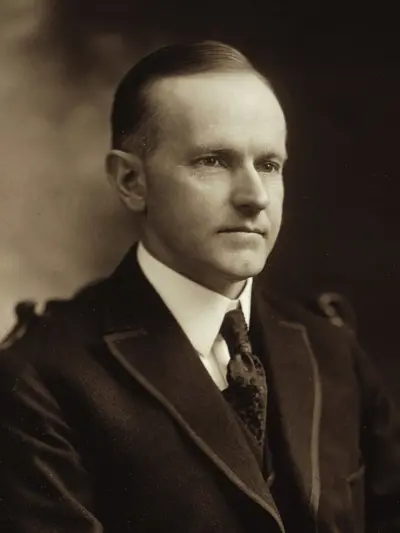
Calvin Coolidge was an American lawyer and politician who served as the 30th president of the United States from 1923 to 1929. A Republican lawyer from New England, born in Vermont, Coolidge worked his way up the ladder of Massachusetts state politics, eventually becoming governor of Massachusetts. His response to the Boston Police Strike of 1919 thrust him into the national spotlight and gave him a reputation as a man of decisive action. The next year, he was elected the 29th vice president of the United States, and he succeeded to the presidency upon the sudden death of Warren G. Harding in 1923. Elected in his own right in 1924, he gained a reputation as a small-government conservative and also as a man who said very little and had a rather dry sense of humor.
