Friedrich Hayek Quotes
The power which a multiple millionaire, who may be my neighbor and perhaps my employer, has over me is very much less than that which the smallest "functionaire" possesses who wields the coercive power of the state, and on whose desecration it depends whether and how I am allowed to live or to work.
Friedrich A. Hayek, 1899-1992, Austrian Economist and Political Philosopher, Nobel Laureate in Economics, The Road to Serfdom, 1944
Sourced by: Eigen's Political and Historical Quotations


Such a comcept has been shared by most autocratic governments like Nazi Germany, but before and after Germans did not see this subservience to and power of the state as desirable or even necessary. The Vatican has had periods like this. But this Sistema has been a part of Russian culture during the millinium of Czarist rule. It was used andn explicitly made a part of Lennin and the Russian Revolutionaries, and then so heavily used by Joseph Stalin before, during and after WWII. It continued under the Post Stalinist Communist leader and when the Soviet Union fell and Russia became less authoratoran, it was not utilized but it was deeply embedded in the Russian psyche and culture as demonstrated by the fact that Vladimir Putin began t use it as an instrument of his governance.


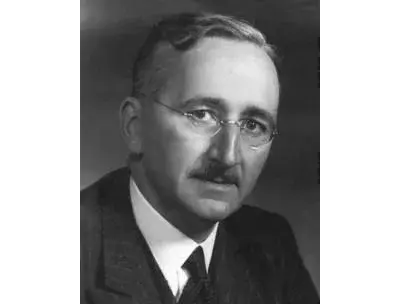
Friedrich August von Hayek CH FBA, often referred to by his initials F. A. Hayek, was an Austrian-British economist and philosopher who is best known for his defence of classical liberalism. Hayek shared the 1974 Nobel Memorial Prize in Economic Sciences with Gunnar Myrdal for his "pioneering work in the theory of money and economic fluctuations and [...] penetrating analysis of the interdependence of economic, social and institutional phenomena". His account of how changing prices communicate information that helps individuals co-ordinate their plans is widely regarded as an important achievement in economics, leading to his Nobel Prize.
