Nathaniel Hawthorne Quotes
Good Heavens! What liberties I have been taking with one of the potentates of the earth, and the man on whose conduct more important consequences depend than on that of any other historical personage of the century! But with whom is an American citizen entitled to take a liberty, if not with his own chief magistrate? However, lest the above allusions to President Lincoln's little peculiarities (already well known to the country and to the world) should be misinterpreted, I deem it proper to say a word or two, in regard to him, of unfeigned respect and measurable confidence. He is evidently a man of keen faculties, and, what is still more to the purpose, of powerful character. As to his integrity, the people have that intuition of it which is never deceived. Before he actually entered upon his great office, and for a considerable time afterwards, there is no reason to suppose that he adequately estimated the gigantic task about to be imposed on him, or, at least, had any distinct idea how it was to be managed; and I presume there may have been more than one veteran politician who proposed to himself to take the power out of President Lincoln's hands into his own, leaving our honest friend only the public responsibility for the good or ill success of the career. The extremely imperfect development of his statesmanly qualities, at that period, may have justified such designs. But the president is teachable by events, and had now spent a year in a very arduous course of education; he has a flexible mind, capable of much expansion, and convertible towards far loftier studies and activities than those of his early life; and if he came to Washington a backwoods humorist, he has already transformed himself into as good a statesman (to speak moderately) as his prime minister.
This is a wonderful contemporaneous assessment of Abraham Lincoln in his second year of his Presidency by America’s then greatest writer. He had met with Lincoln in the midst of the war and his first few lines reflect on that interview, given Lincoln’s great responsibilities and burden.
Nathaniel Hawthorne, 1804-1864, Writer, “Chiefly About War Matters”, The Atlantic Monthly, July 1862
Sourced by: Eigen's Political and Historical Quotations


There have been many examples of Presidents in time of war who have asked Congress & received additional powers whose constitutionality was sometimes tested. The Alien & Sedition acts of the John Adams administration, Lincoln in the Civil War controlling the Southern governments, Wilson jailing people verbally opposing the draft, FDR incarcerating Japanese Americans in WWII. However, in those cases, the President asked for and got the powers from Congress. Nichols claimed that by Bush, just assuming powers, he was acting like a king & not a president, and that per se was an impeachable offence. As unpopular as Bush was, his Vice President was much moreso, & Bush was in his last term; neither party wanted to go through another impeachment after the Republican attempt to oust William Clinton ended in acquittal. Other constitutional scholars do not believe the “acting like a king” rises to the level of an impeachable offense; only specific “high crimes & misdemeanors” would qualify.


Before assuming the presidency in 1933, Franklin Delano Roosevelt and his wife called on President and Mrs. Hoover in the White House. Social custom required that the call be returned, but Roosevelt told the outgoing President, "I realize, Mr. President, that you are extremely busy, so I will understand if you do not return the call." Hoover responded:

In 1995 the president had agreed with our allies to send troops to support a peace in Bosnia if there was one, but many in Congress attempted to block that possibility.

Strong is referring to the popular support of Abraham Lincoln’s candidacy in Western states.


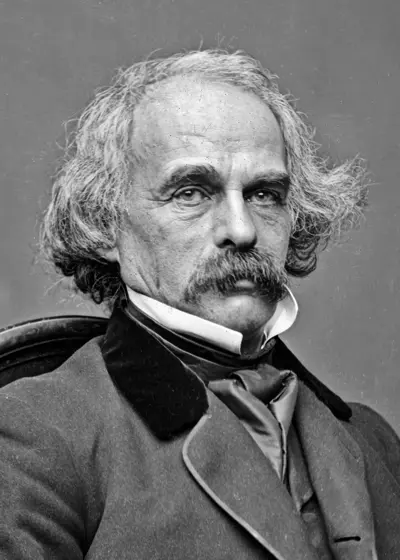
Nathaniel Hawthorne was an American novelist, dark romantic, and short story writer. His works often focus on history, morality, and religion.
