Toussaint Louverture Quotes
God, who knows our most secret thoughts and who sees all, is witness to the purity of my principles. They are not founded on this barbarous ferocity that takes pleasure in shedding human blood.
Beard, John R. The Life of Toussaint L'Ouverture, the Negro Patriot of Hayti. Ingram, Cooke, and Co., 1853, p. 131.


This statement was made in the aftermath of 9-11. However, three years earlier, at a Hamas meeting, the Cleric did not seem to be concerned about the lives of the innocent. See {617372}.

This was a poem on copyright infringement which he held wrong. In American history, there has always been a significant part of the American population who were opposed to copyright on both moral and public policy grounds. In the first decades of existence, the United States did not legally recognize copyright. American publishers copied and republished English works with no compunctions. Benjamin Franklin was one of the worst offenders for people who saw it as an offence. English publishers and some American authors lobbied heavily in America and finally got Congress to pass copyright legislation. However, with every new technology, the battle is fought anew, and large numbers of Americans will use copyrighted material contrary to existing law and feel morally justified in doing so, Publishers and other owners of intellectual property then over compensate and they have lobbied heavily to stop what they call piracy by impinging what used to be the legitimate rights of consumers, readers and scholars—even those who were not violating copyright. It is another of those American political issues that never gets settled and is battled in almost every generation.

Abraham Lincoln used this quotation when referring to the cost to the Southerners of the Civil War. See Quotation 644949.


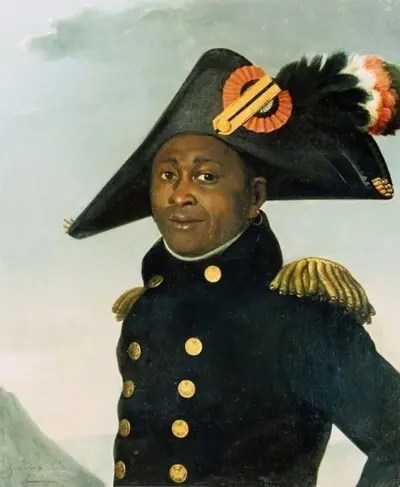
François-Dominique Toussaint Louverture was a Haitian general and the most prominent leader of the Haitian Revolution. During his life, Louverture first fought against the French, then for them, and then finally against France again for the cause of Haitian independence. As a revolutionary leader, Louverture's military and political acumen helped transform the fledgling slave rebellion into a revolutionary movement. Louverture is now known as the "Father of Haiti."
