William Cowper Quotes
God never meant that man should scale the Heavens
By strides of human wisdom. In his works,
Though wondrous, he commands us in his word
To seek him rather where his mercy shines.
Cowper, William. The Task, a Poem, in Six Books. J. Johnson, 1785, p. 104.


This quotation, 500 years later, would be used by American anti-Catholics to justify their antipathy to the Catholic Church. This was about a most undemocratic statement about the common man and his capabilities which was completely counter to the American view. The fact that it was 500 years past or that many American Catholics did not believe it or that even if they did, it was restricted to matters of theological faith, was not considered by the Know-Nothings and others.

This quotation is sometimes used as an illustration of a difficulty that many Western officials have in dealing with Islamic governments. Failure of their plans, policies, and strategies do not become a learning experience or an example to guide the future. The failure was the will of Allah and not the result of the policy. So repeating the strategy of staying with the policy is not per se destructive or useless. Allah may favor it the next time. So there are no consequences of bad policies. Only destiny which Allah has shaped for any of a thousand reasons which are not known to man.


He had a great deal of respect for the views of scholars and people who had little self or vested interest.


Fundamentalist Christians and Jews believe that the Bible is the revealed word of God. In Islam, not only is the same position taken, but it is specifically forbidden to even think about or have a personal opinion about a matter which appears in the Koran—decided by Allah and revealed to the Prophet Muhammed.


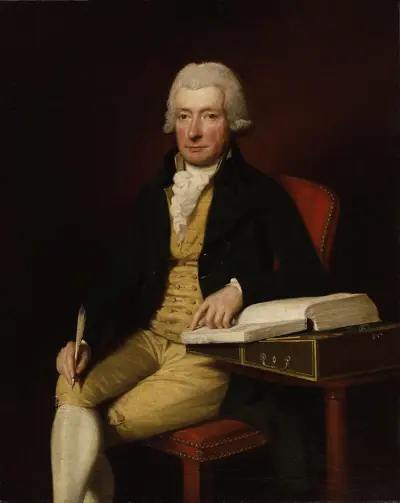
William Cowper was an English poet and hymnodist. One of the most popular poets of his time, Cowper changed the direction of 18th-century nature poetry by writing of everyday life and scenes of the English countryside. In many ways, he was one of the forerunners of Romantic poetry. Samuel Taylor Coleridge called him "the best modern poet", whilst William Wordsworth particularly admired his poem Yardley-Oak.
