Joseph Butler Quotes
God Almighty is, to be sure, unmoved by passion or appetite, unchanged by affection; but then it is to be added that He neither sees nor hears nor perceives things by any senses like ours; but in a manner infinitely more perfect.
Butler, Joseph. Fifteen Sermons Preached at the Rolls Chapel. J. and J. Knapton, 1726.


At the time, it was very difficult for people who had been taught all their lives that God was directly responsible for the creation to accept the notion of evolution. At the time, there was not the overwhelming evidence proving Darwin’s theory that we have today. Nor did theologians realize that evolution and Darwinism were not inconsistent with the concept of a creator and supreme being. Nonetheless, there are still those who, like Agassiz, reject evolution and insist that the Biblical version of creation is literally true. See {586990}. Then there are people who have come up with the concept of Intelligent Design which originated with Agassiz though he never called it that. Most religious people today, in contrast, see no conflict in natural selection as described by Darwin and later proven, and the concept of God. They see the Biblical creation as metaphorical and natural selection as the product of an omniscient supreme being.

Spinoza was by no means an atheist. He was a very orthodox Jew. However his conception of God, while much in the mainstream of modern thought was incomprehensible to the religious authorities of the day. Spinoza was one of the most feared intellectuals in human history—feared that is by the established power structures. He is the only known person who was excommunicated by the Catholics, the Jews and the Muslims. He was the enemy of authority and advocated personal reason as the guide for men.


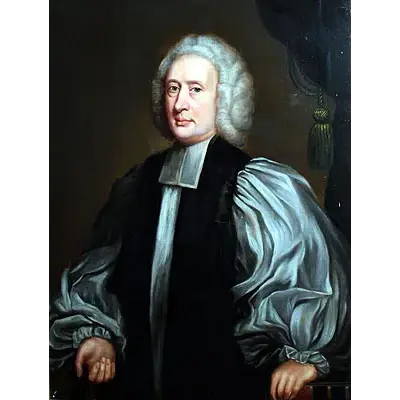
Joseph Butler was an English Anglican bishop, theologian, apologist, and philosopher. He was born in Wantage in the English county of Berkshire (now Oxfordshire). He is known, among other things, for his critique of Deism, Thomas Hobbes's egoism, and John Locke's theory of personal identity. Butler influenced many philosophers and religious thinkers, including David Hume, Thomas Reid, Adam Smith, Henry Sidgwick, John Henry Newman, and C. D. Broad, and is widely considered "as one of the preeminent English moralists." He also played an important, though under appreciated, role in the development of eighteenth-century economic discourse, greatly influencing the Dean of Gloucester and political economist Josiah Tucker.
