William Graham Sumner Quotes
Gentlemen, the time is coming when there will be two great classes, Socialists, and Anarchists. The Anarchists want the government to be nothing, and the Socialists want the government to be everything. There can be no greater contrast. Well, the time will come when there will be only these two great parties, the Anarchists representing the laissez faire doctrine and the Socialists representing the extreme view on the other side, and when that time comes I am an Anarchist.
Starr, Harris E. William Graham Sumner. Henry Holt and Company, 1925, p. 280.

This rigid view left no room for regulation which is what almost every modern industrial democracy has chosen. To some of his extremist followers, any government regulation of business or the economy whatsoever, regardless of how little, means that the nation has embraced socialism. It is in this sense that many extreme right wingers viewed Presidents like Franklin Delano Roosevelt, Harry Truman, John Kennedy, Bill Clinton, and Barack Obama as socialists while they saw themselves as opponents of socialism.

The Tea Party Republican faction was opposed to government doing much of anything other than Defense and Foreign Policy. The regular Republicans saw a much more extensive and robust role of government though few did so to the same extent as Abraham Lincoln and the other founders of the Republican Party, and Theodore Roosevelt and Dwight D. Eisenhower the Republicans following in the Alexander Hamilton tradition.


Churchill and Labor Leader Clement Attlee found themselves at adjoining urinals during a break in a political event.


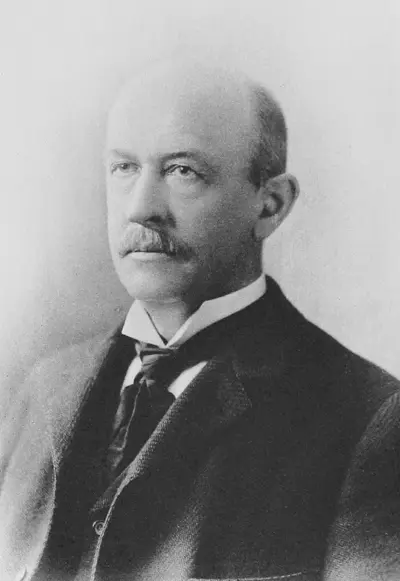
William Graham Sumner was a classical liberal American social scientist. He taught social sciences at Yale, where he held the nation's first professorship in sociology. He was one of the most influential teachers at Yale or any other major school. Sumner wrote widely within the social sciences, with numerous books and essays on American history, economic history, political theory, sociology, and anthropology. He supported laissez-faire economics, free markets, and the gold standard. He adopted the term "ethnocentrism" to identify the roots of imperialism, which he strongly opposed, and as a spokesman against it he was in favor of the "forgotten man" of the middle class, a term he coined. He had a long-term influence on conservatism in the United States.
