John Selden Quotes
Gentelmen heve ever been more temperate in their religion than common people, as having more reason.
Selden, John. Table-Talk. Edited by Edward Arber, A. Murray & Son, 1868, p. 100.


One of the reasons that this quotation is so significant is that the Roman Catholic Church had been historically antithetical to science and scientists. It took hundreds of years before the church would admit that Galileo was right and the church wrong about the earth revolving around the sun. But Pope John Paul II, along with his other major accomplishments removed the traditional Catholic hostility in theology and tradition. He even acknowledged the validity of the Theory of Evolution and taught that there was nothing inherent in evolution that denied God or scripture.


He was persecuted by the Roman Catholic Church for figuring out that the earth revolved around the sun which was contrary to church teaching at the time.

The anti-intellectualism of many Protestant sects has its roots in this view of Martin Luther’s. The notion of reason as practiced by scientists as a hindrance to religion is not a new notion. Religious leaders have been trying to silence and discredit philosophers and scientists as long as there has been religion. Socrates was killed long before Christianity.

Traditionally Islam was a religion of faith and since it was spread to illiterate and uneducated people, it was dogmatic and literal. Reason and logic was not a part of the theology originally. As Islamic societies developed intellectually, the theology matured and reason and logic was overlaid from the science and the technology to the religion. There were many very sophisticated philosophers and theologians until Islam closed intellectually and went into its decline. Just as there were few Islamic scientists and philosophers during the Enlightenment there were few theologians who appreciated the role of logic. Those few, like Abduh, had to become reformers and modernists and return to the era when Islam was as more modern than Christianity and most other religions.


See {641899} where Stanton concludes that religion as it existed then was a barrier to female emancipation.

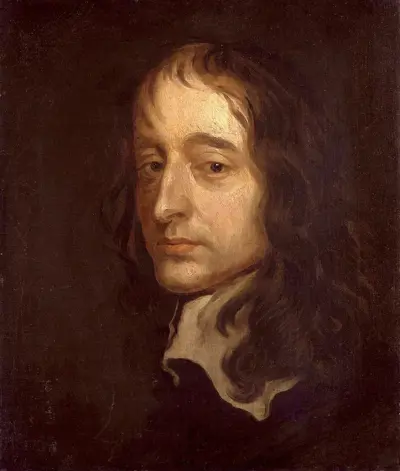
John Selden was an English jurist, a scholar of England's ancient laws and constitution and scholar of Jewish law. He was known as a polymath; John Milton hailed Selden in 1644 as "the chief of learned men reputed in this land."
