William Beveridge Quotes
Full employment does not mean literally no unemployment; that is to say, it does not mean that every man and woman in the country who is fit and free for work is employed productively every day of his or her working life ... Full employment means that unemployment is reduced to short intervals of standing by, with the certainty that very soon one will be wanted in one's old job again or will be wanted in a new job that is within one's powers.
Beveridge, William. Full Employment in a Free Society. George Allen & Unwin, 1944, p. 18.


Actually, the proportion was not so well balanced. Americans were wanting more consumer goods and there was a shortage of labor in 1776. That shortage was particularly critical with various skilled craftsmen ranging from gunsmiths to experienced sailors; carpenters to surveyors. But there was also a shortage of unskilled workers, so Paine’s point was correct: Unemployment was not a problem in colonial America.

This is a statement that in the early 21st century would be made only by ultra liberals. But in the in the late 1940’s this was not only standard democratic party thinking, but a large number of Republicans thought of the Government as the employer of last resort including their Presidential standard bearer.


At the time there was great demand for skilled computer programmers and other technical skills. But there was insufficient demand for many of the skills that the American Workforce such as airplane mechanics, or TV Camera people for example.

The nation was divided over the issue of immigration. Many observed that the vast majority of the immigrants—especially the illegal immigrants performed jobs for which American workers could not be hired. Opponents like the congressman, claimed that if better wages were paid Americans would be doing the jobs, and as long as there were immigrants who would work for low wages, there was little reason for employers to pay more.


This surprising quotation, along with others a far from main steam American views (See {623830} ) assured her election defeat.

There are some conservative economists and businessmen who believe that it is desirable to have some unemployment as a bulwark against inflation. If there are people without jobs, they will hold the general wage rates down.


The existence of a groups of de facto “unemployable” people has been with our country since its inception. However over time, the cadre of unemployable people has changed as the simple jobs are lost to automation and computerized solutions and the jobs that are left require an extensive education and skills set. While the New Deal programs helped reduce the numbers of unemployable people, and WWII required such great production, by the 21st century, the “unemployable” population had grown substantially and proportionately from 1936.

The Japanese have had this situation and have found a good solution. The older workers are treated the respect of the highest level workers but they relinquish authority and control to the mid-level coming up. They in turn, do more teaching and mentoring, and work fractional time as and when they prefer to. Callahan assumes that most jobs are in large companies with hierarchies based in large part by seniority. However, most of the new jobs in America are created by small companies and start-ups and there always opportunity for new companies started by people of any age. His economic view is that of a static economy and not a growing one, when growth has on the average characterized the American economy since the founding of the country.


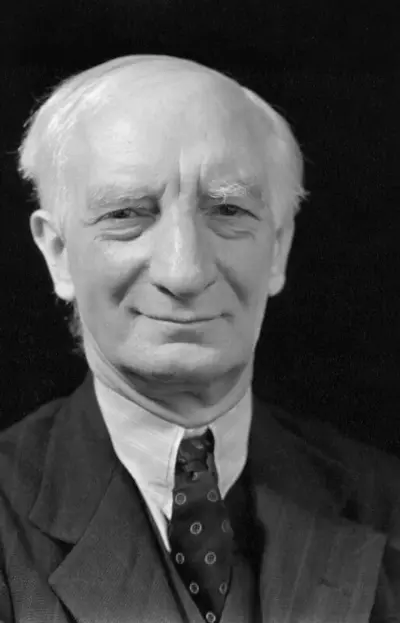
William Henry Beveridge, 1st Baron Beveridge, KCB was a British economist and Liberal politician who was a progressive and social reformer. His 1942 report Social Insurance and Allied Services (known as the Beveridge Report) served as the basis for the post-World War II welfare state put in place by the Labour government elected in 1945. He was considered an authority on unemployment insurance from early in his career, served under Winston Churchill on the Board of Trade as Director of the newly created labour exchanges, and later as Permanent Secretary of the Ministry of Food. He was Director of the London School of Economics and Political Science from 1919 until 1937, when he was elected Master of University College, Oxford.
