Thomas Paine Quotes
Our present numbers are so happily proportioned to our wants that no man need be idle.
Actually, the proportion was not so well balanced. Americans were wanting more consumer goods and there was a shortage of labor in 1776. That shortage was particularly critical with various skilled craftsmen ranging from gunsmiths to experienced sailors; carpenters to surveyors. But there was also a shortage of unskilled workers, so Paine’s point was correct: Unemployment was not a problem in colonial America.
Paine, Thomas. Common Sense. W. & T. Bradford, 1776, p. 37.


In the 19th century, most socialists thought that the government was the major creator of jobs. In the 20th century, most socialists acknowledged that jobs could emanate from both the public and private sectors. Here in the 21st century, one of the world’s leading socialists, stated that private companies were necessary for full employment.


The existence of a groups of de facto “unemployable” people has been with our country since its inception. However over time, the cadre of unemployable people has changed as the simple jobs are lost to automation and computerized solutions and the jobs that are left require an extensive education and skills set. While the New Deal programs helped reduce the numbers of unemployable people, and WWII required such great production, by the 21st century, the “unemployable” population had grown substantially and proportionately from 1936.

Every generation seems to think that youth of their day do not have the work ethic that was evident in the past, but as this historical quotation illustrates, the past was very much the same and we tend to have a cultural nostalgia for an imagined past.


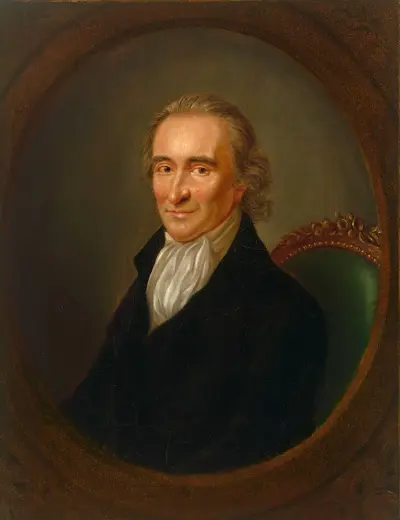
Thomas Paine was an English-born American political activist, philosopher, political theorist, and revolutionary. He authored Common Sense (1776) and The American Crisis (1776–1783), the two most influential pamphlets at the start of the American Revolution, and helped inspire the patriots in 1776 to declare independence from Great Britain. His ideas reflected Enlightenment-era ideals of transnational human rights. Historian Saul K. Padover described him as "a corsetmaker by trade, a journalist by profession, and a propagandist by inclination".
