Albert Bushnell Hart Quotes
From William of Orange to William Pitt the younger there was but one man without whom English history must have taken a different turn, and that was William Pitt the elder.
Hart, Albert Bushnell. Formation of the Union, 1750-1829. Longmans, Green, and Co., 1892, p. 31.


This was not exactly a complement. Adams was outraged by Paine’s overt and public atheism and anti religious statements. (See {623040}.) Others of the founding fathers were also atheists but Paine wrote publicly and actively tried to persuade people of his religious position. Adams was particularly concerned because Paine was not just one of the great leaders of the American Revolution. His was the most recognized name, and a huge percentage of the American population had read his Common Sense. He was the person who was most persuasive with the mass of Americans to revolt—more so than Jefferson, Washington, Madison, Franklin or any of the other great men of the time. Because Paine was so influential, Adams thought that he should be more passive in shaking the religious faith of so many others. Actually, it was Paine’s overt atheism that has tended to diminish his influence and status given by historians throughout the ages. It also caused him some difficulty in America after the Revolution and moreso in England.


Baldwin when Prime Minister would not arm England to stop Germany and after he left office, supported his successor, Neville Chamberlain, in his peace efforts which turned out to be appeasement, See {626936}.


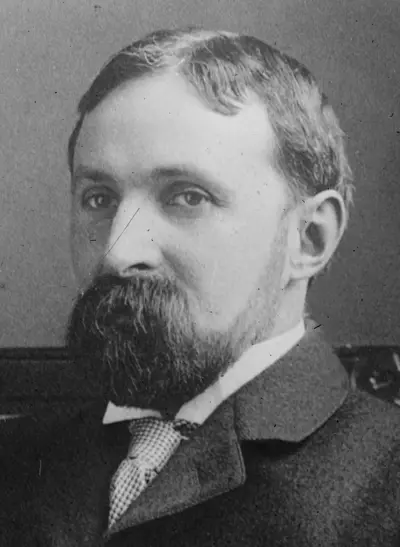
Albert Bushnell Hart was an American historian, writer, and editor based at Harvard University. One of the first generation of professionally trained historians in the United States, a prolific author and editor of historical works, Albert Bushnell Hart became, as Samuel Eliot Morison described him, "The Grand Old Man" of American history, looking the part with his "patriarchal full beard and flowing moustaches."
