Thomas Paine Quotes
From the east to the west blow the trumpet to arms! Through the land let the sound of it flee; Let the far and the near all unite, with a cheer, In defense of our Liberty Tree.
Paine, Thomas. "The Liberty Tree". The Pennsylvania Magazine, July 1775, p. 328.


He drove the British into the sea when no one expected that outcome.

The Prime Minister, Neville Chamberlain, preceded him with the announcement of declaration of war against Germany, but it was left up to the Foreign Minister to explain the implications. This was the first time in history that a nation had used radio to communicate such momentous events to its population.


With a professionalized all volunteer military, most of whom came from just a few socio-economic strata of our society, wars at the time were fought and the risks and burdens borne by a small part of American society. The rest of society, unlike the Second World War did not experience any change in their style or standard of living.


The Chinese were massacred when the Japanese invaded with atrocities against civilians that were inconceivable until Hitler began his in Europe. However, there were many Chinese we worked against the Japanese including the Communists who made a truce with Chiang (see {636322}) so that they could oust the Japanese invaders.

1st Earl of Chatham. The speech was given in the midst of the American Revolution.
This was the address where FDR used the “arsenal of democracy” phrase which became so famous. A similar phrase was used in May by Robert E. Sherwood--{624748}. Then Jean Monnet began to use the exact phrase in Mid 1940--{624746}. He almost certainly had read Sherwood’s earlier, similar phrase. However so had Presidential Aid Harry Hopkins who thought that it would be a good phrase for President Roosevelt to use to “brand” the activity of the United States. So diplomatically, Monnet was asked not to use the phrase any more, and he acceded to the request. At the end of the year, FDR gave his address with this quotation.


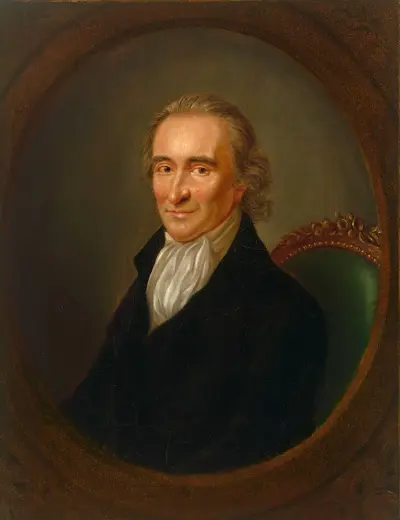
Thomas Paine was an English-born American political activist, philosopher, political theorist, and revolutionary. He authored Common Sense (1776) and The American Crisis (1776–1783), the two most influential pamphlets at the start of the American Revolution, and helped inspire the patriots in 1776 to declare independence from Great Britain. His ideas reflected Enlightenment-era ideals of transnational human rights. Historian Saul K. Padover described him as "a corsetmaker by trade, a journalist by profession, and a propagandist by inclination".
