William O. Douglas Quotes
Free speech is not to be regulated like diseased cattle and impure butter. The audience that hissed yesterday may applaud today, even for the same performance.
Douglas, William O. Dissenting opinion. Kingsley Books, Inc. v. Brown, 354 U.S. 436, Supreme Court of the US, 24 June 1957, p. 446.


Many Turks deny that there was a genocide and claim that the Armenians were conspiring with the Turkish Russian enemies. In order to stop the public discussion of the subject, they went to a local court and got a judge to rule that they could not use a public university for such a controversial subject. The Prime Minister and other Turkish leaders were outraged. Quickly a private university offered to provide the facility for the event with the original participants still involved. However Erdogan has had two political faces in his career—one as a moderate reformer where freedom of speech was values, and the other as the head of an Islamic political party where Islamic law makes some kinds of speech a capital crime (Heresy and blasphemy).


In September of 2005 a Danish Newspaper published some political cartoons showing the hypocrisy of some Muslims who use Islam to justify murder of innocents and terrorism. Months later, in January of 2006 many in the Middle East protested vehemently and Muslim riots broke out because the Prophet Muhammad's visage was depicted against Islamic tradition. Many Muslim nations started a boycott against Denmark. Many Muslim leaders claimed that insulting religion was an “abuse” of freedom of speech including those from nations which regularly publish material that is virulent against Christians and Jews.


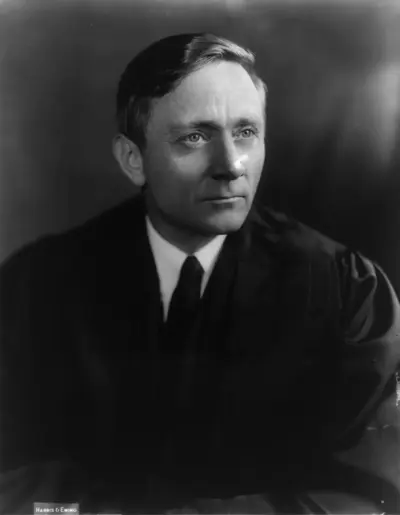
William Orville Douglas was an American jurist and politician who served as an associate justice of the Supreme Court of the United States. Nominated by President Franklin D. Roosevelt, Douglas was confirmed at the age of 40, one of the youngest justices appointed to the court. His term, lasting 36 years and 211 days (1939–75), is the longest in the history of the Supreme Court. In 1975, Time magazine called Douglas "the most doctrinaire and committed civil libertarian ever to sit on the court."
