Justin Cartwright Quotes
Franschhoek Valley was, in recent memory, a simple place with some notable vineyards and two or three streets of Victorian cottages and a few older, thatched houses. The valley was settled early in the 1680s by Huguenots fleeing repression.
Cartwright, Justin. "South Africa: The French connection." The Daily Telegraph, Telegraph Media Group, 4 Feb. 2010.


The Massacre of St. Bartholomew followed the assassination.

Justifying French support of the very weak Moroccon Government.


This quotation—presented in its entirety because it is so unbelievable—illustrates one of the uglier and nasty aspects of Colonial America. Most of us associate early American colonists with persecuted minorities escaping the intolerance of Europe, but so much of the concept of tolerance then concentrated on the rights of a religious community but provided little if any obligation to then be tolerant of OTHER minorities in their colonies and communities. In this case, Massachusetts Christians did not perceive Quakers as either Christians or another sect to be tolerated. They not only wanted the Quakers stopped from coming to other parts of America, but actually attempted to interdict the Quaker immigrant ship, capture the Quakers, and sell them into slavery in the Caribbean. What makes the incident even more offensive is that the ethics of this was never questioned and was even justified as Christian acts and even duty. The Welcome evaded the Porpoise The founding fathers knew about these incidents and the religious discrimination that was rampant in many Colonial communities as bad as England and Europe. Hence, the separation of Church and State concepts were not just protections against the way of the old world, but dealt with a clear and present danger that Colonial history had demonstrated.

Charles was a young man who ruled under the thumb of his mother, Catherine de Medici. She and the leading Catholic political figures had decided to have the army massacre the Huguenots—Protestants—of France. Charles knew the massacre was to begin that night and tried to save his friend Rochefoucault, a Protestant, who was a member of the King’s court. He suggested several times that Rochefoucault not go home that evening but stay at the Louvre. The unsuspecting Rochefoucault felt that he had to get home to his wife and left explaining that to the King. Hence the King’s remark. Rochefoucault and his family were murdered that night. In the end, 50,000 Protestants were massacred in what has come to be known as the Massacre of Saint Bartholomew. Many of the palace servants were Protestants and were cut to ribbons throughout the palace. The King from a palace window shot a rifle at Protestants trying to swim the River Seine to escape, while his page kept reloading for him.

It was uttered in the King’s name by soldiers and officials throughout the land. It is not certain that the exact words of choice were created by Louis but they were uttered in his name. Protestants had been given the right to practice their religion in France by the King’s grandfather (the Edict of Nantes {617664}), but Louis XIV rescinded that {617765} and gave Protestants this choice. Some converted. Some were murdered. Some escaped to other countries.

The letter was in response to the King’s letter commanding him and all the other governors to massacre all the Protestants in his district. Montmorrin, a Catholic, died suddenly and shortly thereafter. It is supposed he and one other objector (Viscount Orthez) were poisoned by order of King Charles. All the other governors obeyed and 50,000 Protestants were murdered in the Massacre of Saint Bartholomew.

Admiral Coligny was a leading French Protestant. He was murdered along with 50,000 Protestants by the French Catholics in what has come to be known as Massacre of Saint Bartholomew. Earlier in his career Pius V had been the an inquisitor or the Inquisition and was appointed “Inquisitor General For All Christendom,” so he had an anti-Protestant background. Incredibly enough, he was beatified and canonized a saint despite—some say because of—his participation in and encouragement murders of non-Catholics and even Catholics who happened to dissent on some aspect of theology. It is not clear whether the Pope knew in advance of the planned massacre or whether he or his representatives had any part in the planning of it. Since the end of the Second World War, Popes have been in the forefront of protest and moral condemnation of religious or ethnic atrocities, and it is hard for most of us to conceive that a Pope could countenance the murder of 50,000 souls by his faithful followers.
In August of 1572 Catholics in Paris led by the Marshall and his soldiers attacked the homes of all known Huguenots, murdering the inhabitants. Tavannes rode through the streets of Paris on his horse shouting the first quotation to his troops who would murder the helpless Protestants. The frenzy spread to the countryside. When it was over 50,000 innocent, unsuspecting Protestants had been murdered. When asked how he, a military marshal felt about such a one sided action against unarmed civilians he responded with the second quotation. The event came to be known as the Massacre of Saint Bartholomew as it commenced on that Saint’s day.

Both Puritans and Quakers were persecuted and physically abused in England by the Anglican Church. The Puritans as soon as they became dominant in part of the American colonies began persecuting Quakers. The Quakers who were the majority in the Pennsylvania colony, however were tolerant of other religions. This history was another of the many reasons the Founding Fathers wanted no established church. A “scorpion” was a type of whip that was particularly painful.
The Governor of New Amsterdam, Peter Stuyvesant, was a bigoted Protestant of the Dutch Orthodox church and did not want to allow non-Protestants into the Colony, However, he was overruled by the Directors of the Dutch West India Company which rolled the colony designed to be a money making enterprise. Jews and others were allowed to enter and become citizens, however while they could worship in any way they chose in their own homes, they could not build any places of worship of have any public prayer of other aspects of their religion. This was the hypocrisy to which Bangs refers. However, at the time, it was more liberality and tolerance than most of the Christian world.


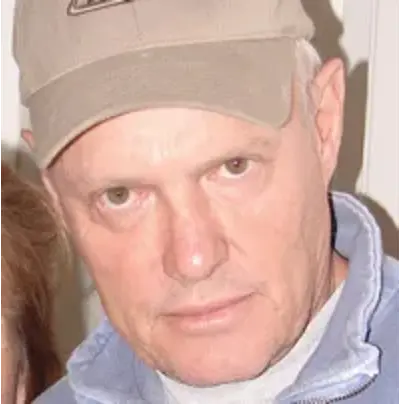
Justin James Cartwright MBE FRSL was a British novelist, originally from South Africa.
