Carrie Chapman Catt Quotes
For two generations groups of women have given their lives and their fortunes to secure the vote for the sex and hundreds of thousands of other women are now giving all the time at their command. No class of men in our own or any other country has made one-tenth the effort nor sacrificed one-tenth as much for the vote.
Catt, Carrie Chapman, and Nettie Rogers Shuler. Woman Suffrage and Politics: The Inner Story of the Suffrage Movement. Charles Scribner's Sons, 1923, p. 107.


She was the first presidential candidate's wife to admit such a radical position.


Many people, mostly men, tended to regard and label the militant suffragettes as extremists and allowed as how women who advocated their voting rights but in an acceptable way might be wrong but they were at least ladies. The same kind of attempted split occurred in the latter half of the 20th century over the Woman’s movement. The Feminists were not “ladies” and were not to be emulated by normal women even if they had sympathy for he views. Groups without power have always been acceptable to society as long as their cries for a share of power were ineffectual and did not disrupt the existing order. But when they begin to use more successful means and are heard and attended to, then they are labeled as extremists not to be emulated by “decent” people.


Some men in the audience hissed as she took the podium.


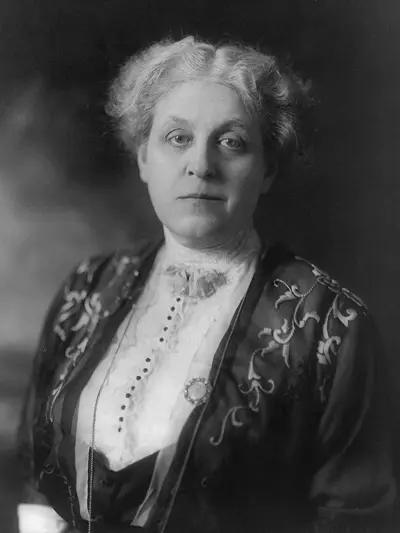
Carrie Chapman Catt was an American women's suffrage leader who campaigned for the Nineteenth Amendment to the United States Constitution, which gave U.S. women the right to vote in 1920. Catt served as president of the National American Woman Suffrage Association from 1900 to 1904 and 1915 to 1920. She founded the League of Women Voters in 1920 and the International Woman Suffrage Alliance in 1904, which was later named International Alliance of Women. She "led an army of voteless women in 1919 to pressure Congress to pass the constitutional amendment giving them the right to vote and convinced state legislatures to ratify it in 1920" and "was one of the best-known women in the United States in the first half of the twentieth century and was on all lists of famous American women."
